
Edge metal and flashing go first
Perimeter details carry the highest uplift pressure in a hurricane or tropical storm, so we inspect coping, edge metal, and parapet flashing closely even when the field membrane looks undamaged from a distance.
A lifted edge or an opened seam from hurricane-force gusts can let wind and rain travel across a much wider section of roof than the visible entry point suggests, which is why we document the whole field instead of only the obvious spot.
Schedule a roof review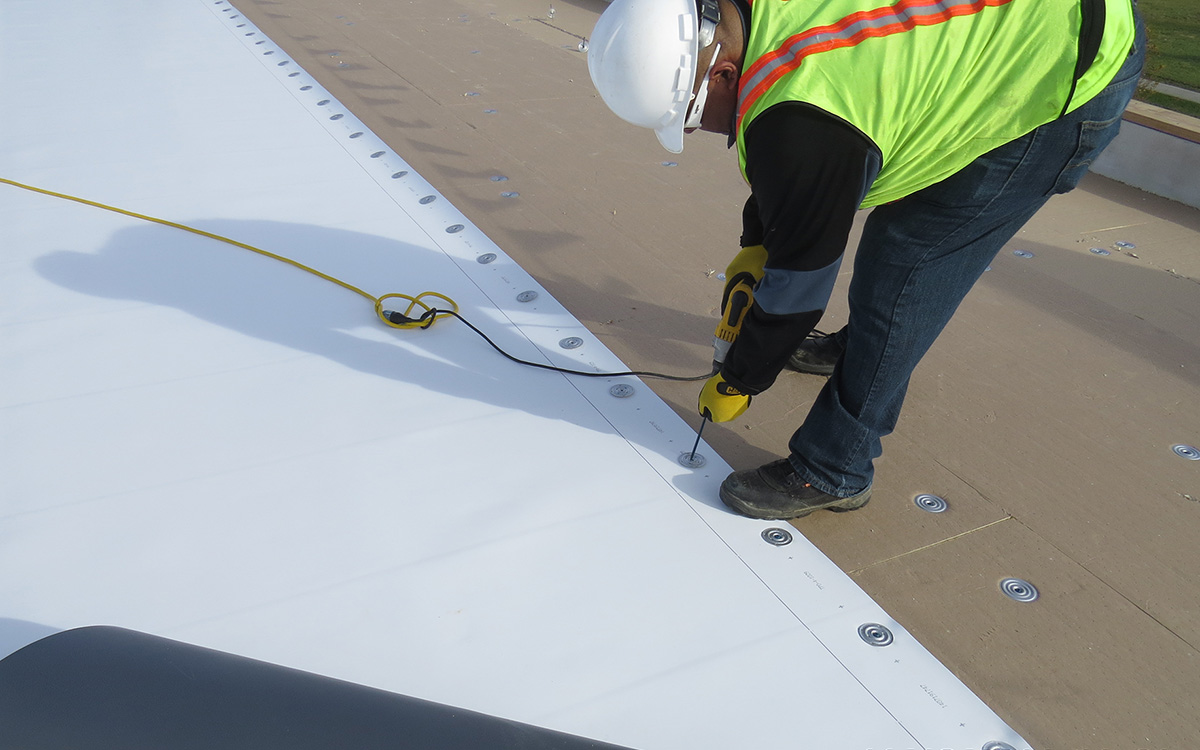

After a hurricane or strong tropical system moves through, we walk the roof looking for lifted or torn edge metal, open and fishmouthed seams, punctured or torn membrane from wind-borne debris, and saturated insulation under sections that still look intact from above. On the industrial and warehouse stock along the Ship Channel and the distribution buildings off Beltway 8, wind uplift on large open fields of membrane can travel a long way from the point where it started.
We also check drainage. Tropical systems can drop several inches of rain in a matter of hours, and a roof with a clogged scupper or an undersized drain will pond and back water into details that were never designed to sit underwater. That ponding-related damage is part of the same storm event and belongs in the same documentation.

Hurricane Harvey in 2017 remains the reference point most Houston-area owners think of, but wind and flooding rain from any tropical system moving through or near the metro can produce roof damage worth a claim. We photograph and map the damage, note the mechanism, and if the roof needs to be dried in while the claim moves forward, we can put temporary protection in place and document that work as well.
We're a roofing contractor, not a public adjuster. We won't file the claim or negotiate with your carrier, but we will give you and your adjuster a documented, roof-level account of what the storm did, so the approved scope matches the damage instead of a partial estimate.
Roof planning notes
Perimeter details carry the highest uplift pressure in a hurricane or tropical storm, so we inspect coping, edge metal, and parapet flashing closely even when the field membrane looks undamaged from a distance.
Water pushed sideways by hurricane-force wind can travel well past the opening it entered through, saturating insulation under membrane that still looks intact. We check for that hidden moisture before it becomes an interior leak.
Texas commercial policies often carry a separate windstorm or named-storm deductible calculated as a percentage of building value. A thorough, roof-level record helps make sure the covered scope is documented accurately against that deductible.
We're your roofing contractor, not a public adjuster. Our job is an accurate record of hurricane and wind damage; the claim decision and negotiation stay between you and your insurer.
Commercial property policies typically handle wind and hurricane coverage differently than residential policies, often with a separate named-storm or windstorm deductible. We're not insurance advisors, but we document the roof damage clearly enough for you and your adjuster to apply whatever deductible structure your policy uses.
As soon as it's safe to access the roof. Wind-driven rain can saturate insulation before any interior leak appears, and documenting the damage while the storm event is recent makes the cause easier to establish.
That's a core part of what we document, distinguishing fresh wind or wind-driven-rain damage from pre-existing wear, so the claim reflects the storm event rather than getting attributed to age.
Yes. Most policies expect you to prevent further damage after a storm, and we can dry the building in with temporary measures and document that work as part of the claim record.
An older roof can still have a legitimate wind or storm damage claim. We separate the storm-caused damage from ordinary age-related wear so the documentation is accurate either way.
Insurance claim resources: Commercial Roof Insurance Claim Assistance · Hail Damage Insurance Claims · Wind & Storm Damage Insurance Claims · Insurance Claim Coordination
Related repair services: Storm Damage Roof Repair · Commercial Roof Inspection · Emergency Tarp & Dry-In · Post-Storm Roof Inspections · Contact Us