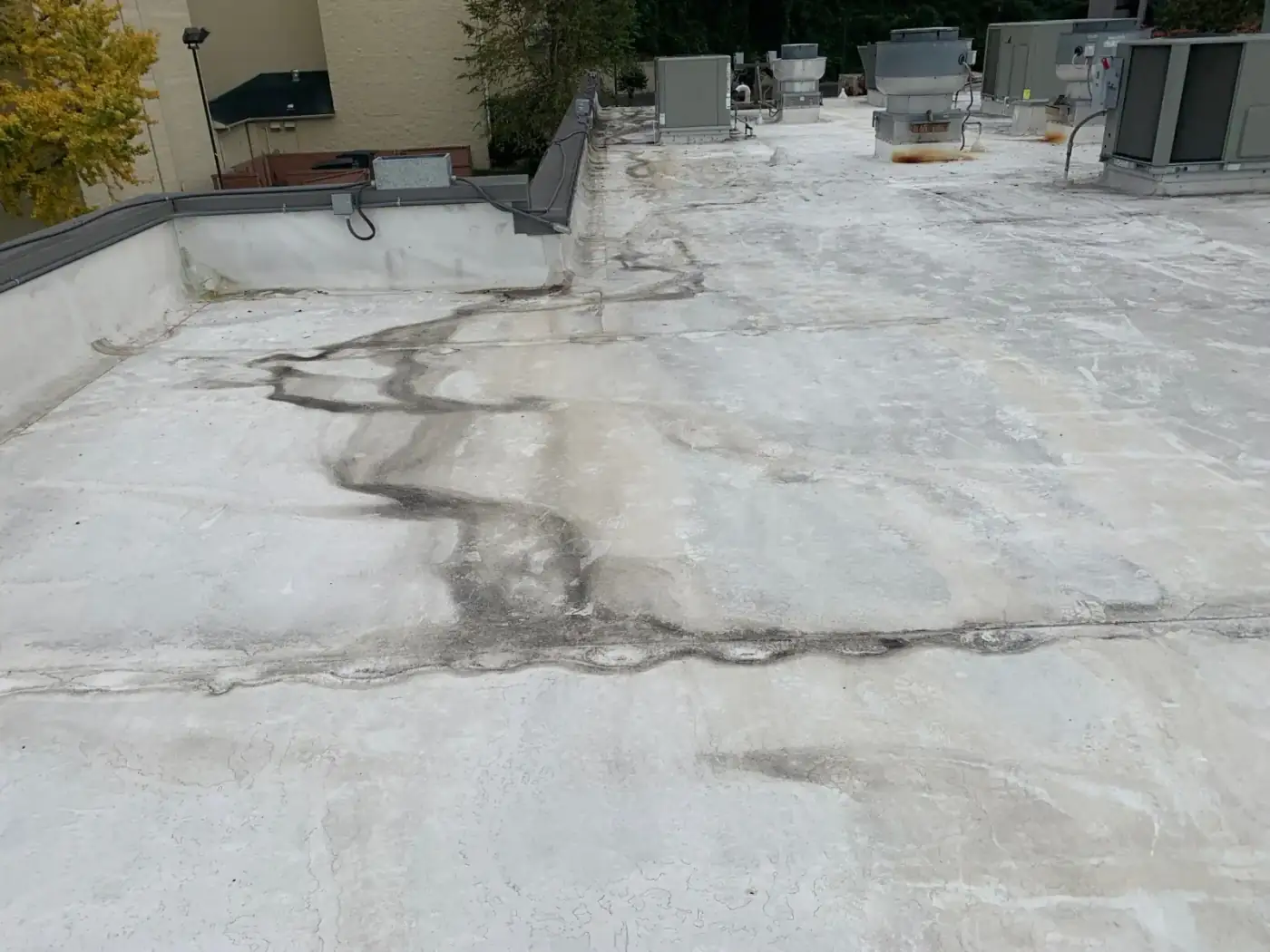
We check the perimeter first, coping, edge metal, and parapet flashing, since that's where uplift concentrates, then move across the field membrane for open or displaced seams, torn sections, and any rooftop equipment, curbs, or vents that shifted or lost their flashing. On metal roofs, we look for panel movement at fastener points and any exposed screws that could let wind-driven rain in.
Across Harris County's warehouse and distribution footprint along Beltway 8, 290, and I-45, large open membrane fields are especially exposed to straight-line wind, and damage can appear well inside the roof, well past the edges. We walk the full field, not only the perimeter, before we call a scope complete.