Skip to content

Documented post-storm roof inspections for Houston commercial buildings after hurricanes, hail, and wind. Wind-uplift, moisture, and drainage assessment for insurance claims.

Schedule a Roof Review

  • What a post-storm inspection on a Houston commercial roof actually checks
  • A named storm pushes through Harris County and the building goes back to business the next morning, but the roof rarely tells you what happened to it from inside the lobby. Wind that peeled a corner, hail that fractured the membrane surface, or a few hours of standing water that found a seam can all sit quietly for weeks before the ceiling tiles show a stain. We walk the roof after the weather clears and produce a record of its condition while the cause is still attributable to a specific event, which is the part that matters when an insurer asks what damaged the roof and when.
  • Our inspections cover the assemblies that take the brunt of Gulf Coast weather on low-slope commercial buildings: field membrane, perimeter and corner fastening, edge metal and coping, parapet flashings, curb and penetration details, and the internal and overflow drains that carry water off the deck. We document each area with photographs tied to roof-plan locations so the report reads as evidence rather than a list of opinions.
  • Wind damage is mostly about the edges and corners
  • Hurricane and severe-thunderstorm wind does not load a flat roof evenly. Pressures spike at the perimeter and concentrate hardest at the corners, which is exactly where uplift starts to lift a membrane or pry edge metal loose. On the large single-ply roofs common across Houston's warehouse and distribution stock, the first sign of trouble is often a billowing or fluttering field that means fasteners or adhesive have let go in the corner zones even though the center of the roof looks untouched.
  • We check for these specific failure modes after a wind event:
  • Lifted, torn, or displaced membrane at corners and along the perimeter where uplift pressure peaks
  • Loose, bent, or detached edge metal, gravel stop, and coping caps that can progress with the next storm
  • Open or stressed seams and flashings where wind worked the membrane back and forth

Roof planning guidance

Punctures and impact marks from wind-borne debris, common when surrounding roofs or yards shed material Displaced ballast or pavers on systems that rely on weight to hold the membrane down Why corner and perimeter findings get prioritized

Schedule a roof review
Post-Storm Commercial Roof Inspections | Houston, TX
Downtown Houston commercial rooftops

A corner that has partially released is not a cosmetic problem. It is the starting point for a progressive peel, and the next strong front can take a small detachment and turn it into an open field. We flag perimeter and corner conditions as priority repairs because catching them between storms is far cheaper than replacing a section the wind has already opened.

Hail leaves marks the eye misses

Large hail reaches the Houston area regularly, and on commercial roofs its damage is frequently invisible from a distance. Hail can fracture the top surface of a modified-bitumen cap sheet, bruise or split a single-ply membrane, crack the coating on a metal panel, or shatter the granule surface that protects the asphalt underneath. None of that necessarily leaks on day one, but it shortens the life of the system and creates entry points that open up under UV and the next heavy rain.

Houston Energy Corridor commercial buildings

We inspect for impact damage methodically rather than glancing across the field. On modified bitumen and built-up roofs we look for granule displacement, surface fractures, and bruising of the underlying ply. On TPO and PVC we check for splits, stress cracks, and impact dimples, and we pay close attention to softer transition points at flashings and edge details. We also inspect rooftop equipment, condenser fins, vents, and skylights, because corroborating hail damage on metal accessories supports the timing and severity of the event on the membrane itself.

The Houston twist: water that should have drained but didn't

Wind and hail are the obvious storm threats, but in this market the rain volume is its own hazard. The region's history with Harvey-scale flooding and routine tropical-system rainfall means a commercial roof can take inches of water in hours, and a flat or low-slope deck only stays dry if the drainage keeps pace. After a heavy-rain event we check whether the roof actually shed the water it was designed to shed.

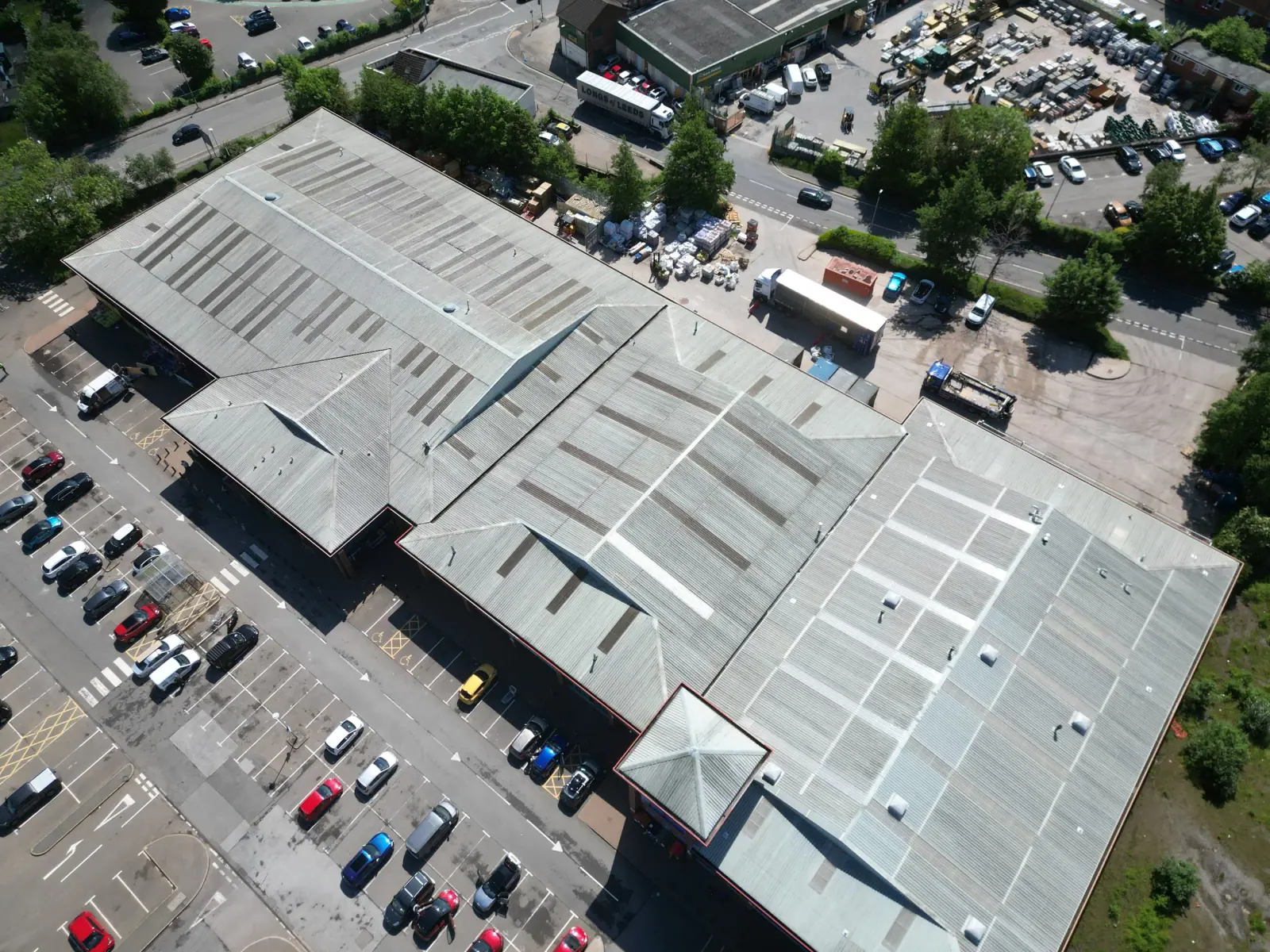
Roof planning notes

Our post-rain drainage check includes:

Talk with a Houston commercial roofing team

Overflow and scupper outlets to confirm the secondary drainage path is clear and functioning

Internal roof drains for debris, blocked strainers, and signs that water backed up around the bowl Ponding areas where water sat well past the 48-hour mark, which stresses membranes and accelerates seam and flashing failure

Deck deflection at low spots, where repeated loading from standing water may have worsened the slope

Staining, sediment lines, and high-water marks that show how deep water stood and where it pooled Talk with a Houston commercial roofing team