


Skip to content

Storm Damage Roof Repair in Houston, TX

Schedule a Roof Review

  • Storm damage roof repair for Houston commercial properties
  • A storm puts a commercial building owner in a specific kind of bind: the weather has passed, water may already be inside, and the roof needs two things at once, immediate stabilization and a clear-eyed assessment of what actually happened up there. We do both. We respond to storm-damaged commercial and industrial roofs across Greater Houston and Harris County, get the building dried in fast, and then take the time to find every bit of damage the storm left behind, including the damage that will not announce itself until the next heavy rain. The goal is a roof that is genuinely sound again, documented well enough to stand behind, not a quick patch that fails the next time a system rolls up the coast.
  • The storms that hit roofs here
  • The Gulf Coast does not deliver one kind of storm damage. It delivers several, often in the same event, and a real repair has to account for all of them.
  • Hurricane and tropical-system wind. From June through November the upper Texas coast is exposed to hurricanes and tropical storms, and the sustained wind and gusts pry at roof edges, lift coping and edge metal, peel back membrane at the perimeter, and back fasteners out of the deck.
  • Large hail. Severe spring and summer storms drop hail that bruises and fractures membranes, dents metal, and shatters the aging fastener washers on exposed-fastener roofs. Hail damage is frequently invisible from the ground and easy to underestimate.
  • Wind-driven debris. In dense districts like the Galleria and Uptown, Westchase, and downtown, dislodged rooftop equipment, signage, and tree limbs puncture membranes and crack older built-up surfaces.
  • Extreme rainfall. Houston takes rain in volumes most of the country never sees, the kind of totals Harvey delivered across the region in 2017, and that volume finds every compromised seam, lifted flashing, and clogged drain in a hurry.
  • First: get the building dried in

Roof planning guidance

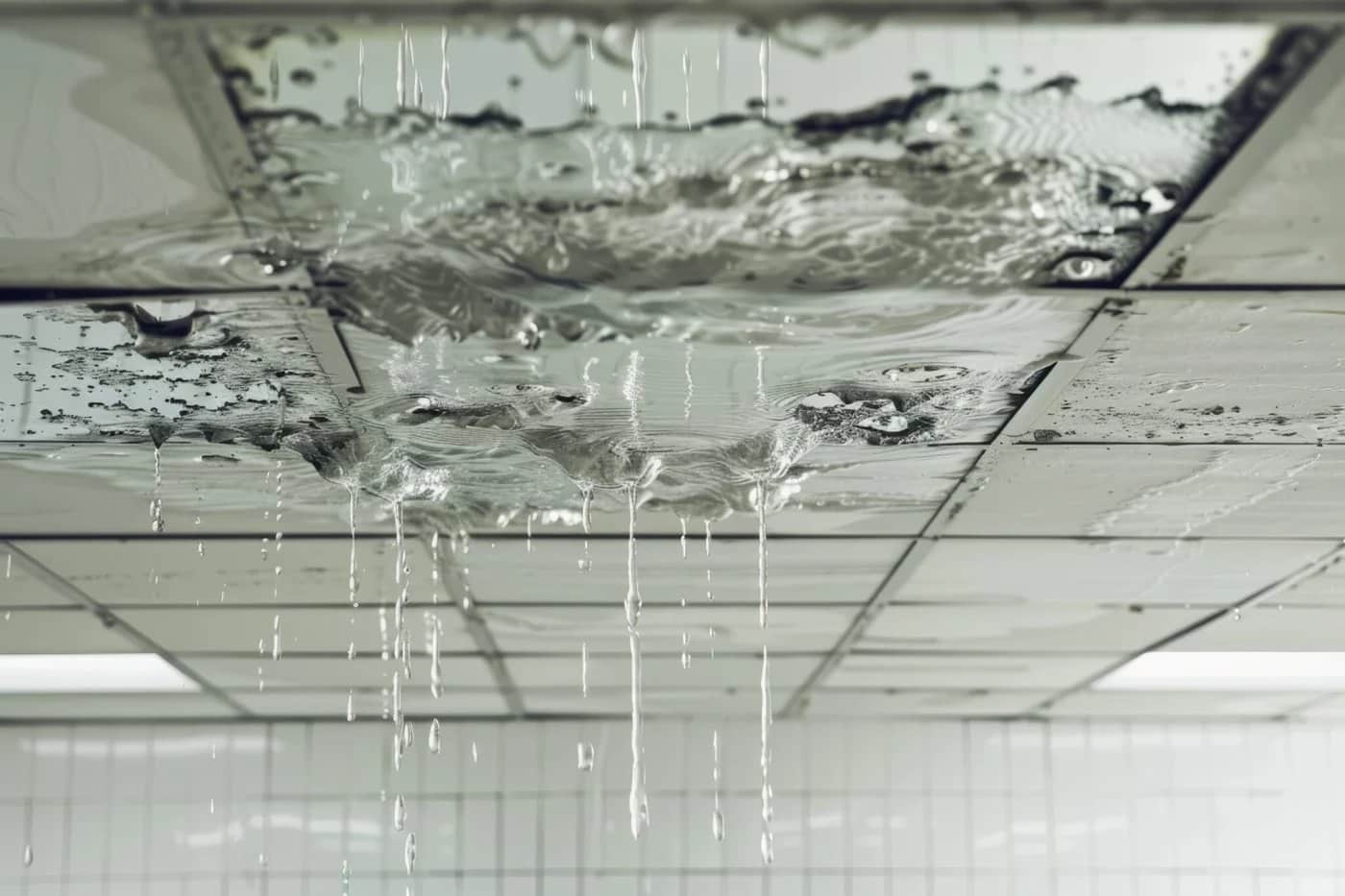
When water is getting in, the first job is to stop it, not to write an estimate. We stabilize storm-damaged roofs with temporary measures suited to the failure, securing torn or lifted membrane, sealing punctures, tarping breached areas, and clearing drains and scuppers so water moves off the roof instead of pooling against the next weak point. A fast, competent dry-in protects your interior, your inventory, and the structure underneath while the permanent repair is scoped, and on a roof where the deck and insulation are still wet, it buys the time those layers need before anything is closed back up over them. Sealing water inside an assembly is how a roof problem becomes a deck-rot and mold problem. Then: find what the storm actually did Storm damage on a commercial roof is deceptive. The visible breach is rarely the whole story, and water that enters at one point tracks laterally through the insulation and shows up as interior staining a long way from where it got in. We walk the entire roof rather than chasing the one obvious leak, and we look where storms actually do their work.

Schedule a roof review
Storm Damage Roof Repair in Houston, TX
Downtown Houston commercial rooftops

Perimeter and corners: the highest-uplift zones, where we most often find membrane separation, billowing, and detached edge metal

Edge metal and coping: loose or lifted caps and fascia, the most common entry point once wind gets underneath

Seams and laps: aged adhesive opened by wind flutter, creating long linear paths for water

Houston Energy Corridor commercial buildings

Fastener pull-out: on mechanically attached single-ply roofs, wind cycling that backs fasteners out while the membrane still looks intact

Penetrations: curbs, vents, and HVAC flashings shifted or cracked by wind and debris

The part owners can't see from the ground is moisture in the assembly. Once a membrane is compromised, the insulation below it can be saturated across a wide area while the surface looks fine. We use moisture survey methods to map the wet insulation so the repair removes what is actually saturated rather than sealing water inside, where it destroys R-value, rots the deck, and feeds mold in our humidity.

Roof planning notes

Documentation that holds up

Talk with a Houston commercial roofing team

Making the repair last

We photograph and measure the damage thoroughly, because that record matters whether you are filing an insurance claim or simply deciding how to spend. We document what the storm did, where, and how, in plain terms a property manager, an owner, or an adjuster can follow. We do not promise claim outcomes or invent the cause of damage to fit a narrative; we document what the roof actually shows and let the evidence speak. An honest, well-photographed assessment is worth far more in a claim than an inflated one. What we recommend depends on the system and how far the damage spread. Sometimes a targeted, durable repair is exactly right. Sometimes a roof has taken enough damage, or was old enough going in, that re-securing it costs more than it's worth and a recover or replacement is the honest call. We tell you which, and we explain why, rather than selling a repair that won't hold or a replacement you don't need.

Membrane repair and re-securement: re-fastening loose field areas, re-welding or re-adhering open seams, and patching punctures with manufacturer-compatible materials so the repair keeps the system's warranty logic intact

Edge and termination rebuilds: re-anchoring or replacing edge metal, coping, and flashings to current wind-uplift detailing, so the most vulnerable part of the roof becomes the strongest part of the repair Talk with a Houston commercial roofing team