
Document the Roof Before Spending
We separate urgent leak work from planned capital work with photos, measurements, roof access notes, and enough detail for ownership to make a practical decision.
Ballasted arrays are attractive precisely because they avoid holes, but on the Gulf Coast wind is the limiting factor.
Schedule a roof reviewDuring hurricane season from June through November, a flat array acts like a field of small wings, and uplift is brutal at roof edges and corners. An under-ballasted or poorly secured array does not just blow off; loose panels become projectiles and the racking can tear the membrane as it shifts. Any solar layout on a Houston roof has to be engineered to local wind loads, with heavier ballast or hybrid attachment in the perimeter and corner zones where pressures spike. We make sure the racking plan and the roof can actually carry both the dead load and the storm load before anything is set.
Structural and Drainage Coordination
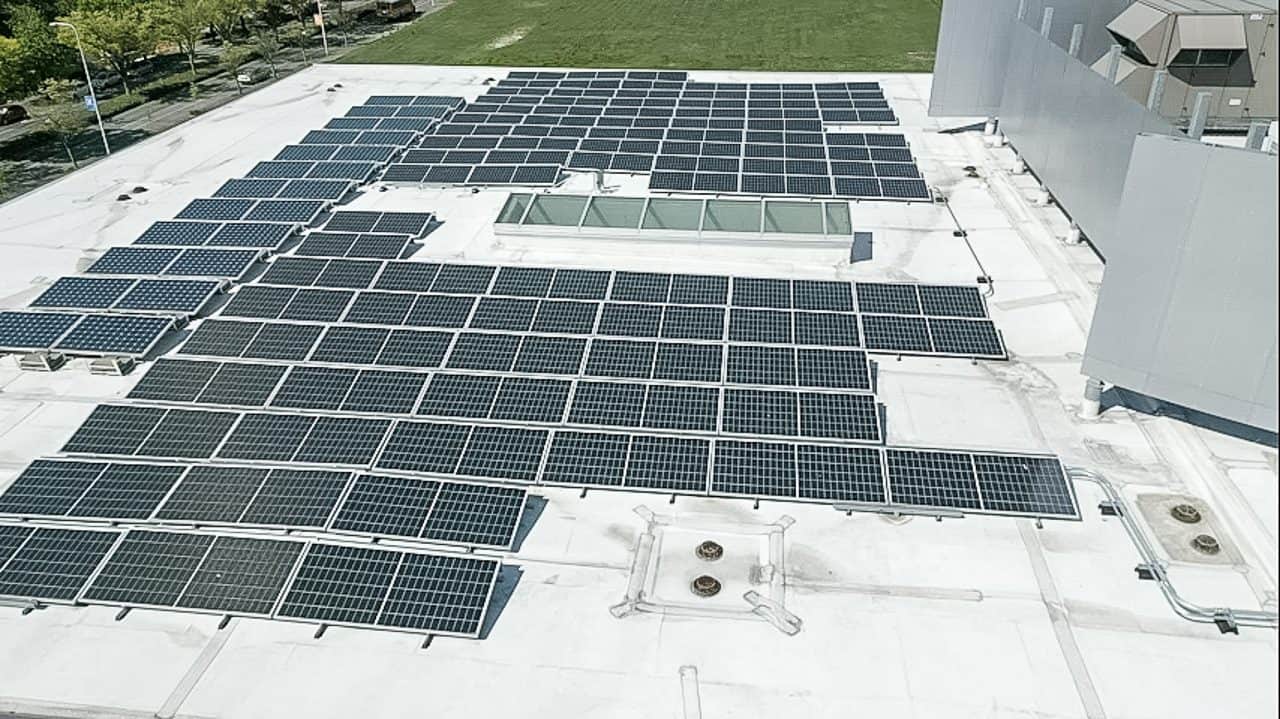

Solar adds weight, and ballasted systems add a lot of it. We verify with the structural engineer that the deck and framing can take the added load, especially on older buildings. We also protect the roof's drainage. Houston's rainfall is heavy and Harris County drainage requirements are strict, so we lay out arrays to keep racking and ballast clear of drains, scuppers, and crickets, and we never let a panel field create new ponding. Standing water under an array is hard to spot and harder to fix once the panels are in the way.
Our roofs run hot. A white or light single-ply membrane under the array lowers the rooftop temperature, which helps panel efficiency, since PV output drops as cells heat up, and slows the aging of the membrane itself. We also plan walkways and service paths into the layout so future roof maintenance and inspections can happen without crews stepping on live wiring or scuffing the membrane between rows. A roof you cannot safely walk is a roof that does not get maintained.

We coordinate directly around the membrane manufacturer's requirements so the finished installation keeps your roof warranty in force. That means using approved attachment and flashing components, documenting the work, and sequencing it with the solar contractor so responsibility for the waterproofing layer stays clear. When the roofing and the solar are planned as one project rather than two, you get an array that produces power for decades and a roof that keeps doing its only job underneath it.
Talk to Us Before the Panels Go Up
Roof planning notes
We separate urgent leak work from planned capital work with photos, measurements, roof access notes, and enough detail for ownership to make a practical decision.
Different roof areas carry different traffic, equipment, drainage, tenant, and weather risks. The scope should match those realities instead of treating the whole roof as one flat problem.