


Skip to content

Self Storage Roofing in Houston, TX

Schedule a Roof Review

  • Keeping tenants' belongings dry across Houston
  • A self-storage roof has one job that matters above all others: keep water away from what's inside the units. Tenants store furniture, business inventory, electronics, documents, and irreplaceable personal property, and a single leak that reaches a unit can turn into a damage claim, a lost customer, and a hit to a facility's reputation. We roof storage properties across the Houston area with that reality driving every detail, because on these buildings a small leak is rarely a small problem.
  • Self-storage has grown fast in Greater Houston, following the same population and commercial expansion that has filled the suburbs and the corridors around the Sam Houston Tollway. You'll find facilities packed along arterials in every quadrant of Harris County, from older single-story drive-up rows to the newer three- and four-story climate-controlled buildings going up near dense residential pockets. Each format puts different demands on the roof, and all of them have to survive the same Gulf Coast weather that tests every commercial roof in the region.
  • The two roof types we work on most
  • Storage facilities tend to fall into two roofing categories, and we handle both:
  • Low-slope membrane roofs on multi-story and climate-controlled buildings. These are large, flat expanses best served by single-ply systems like TPO and PVC, modified bitumen, or restoration coatings. Reflectivity matters here because a climate-controlled facility runs cooling year-round, and a white membrane keeps rooftop heat and energy load down through the long Houston summer.
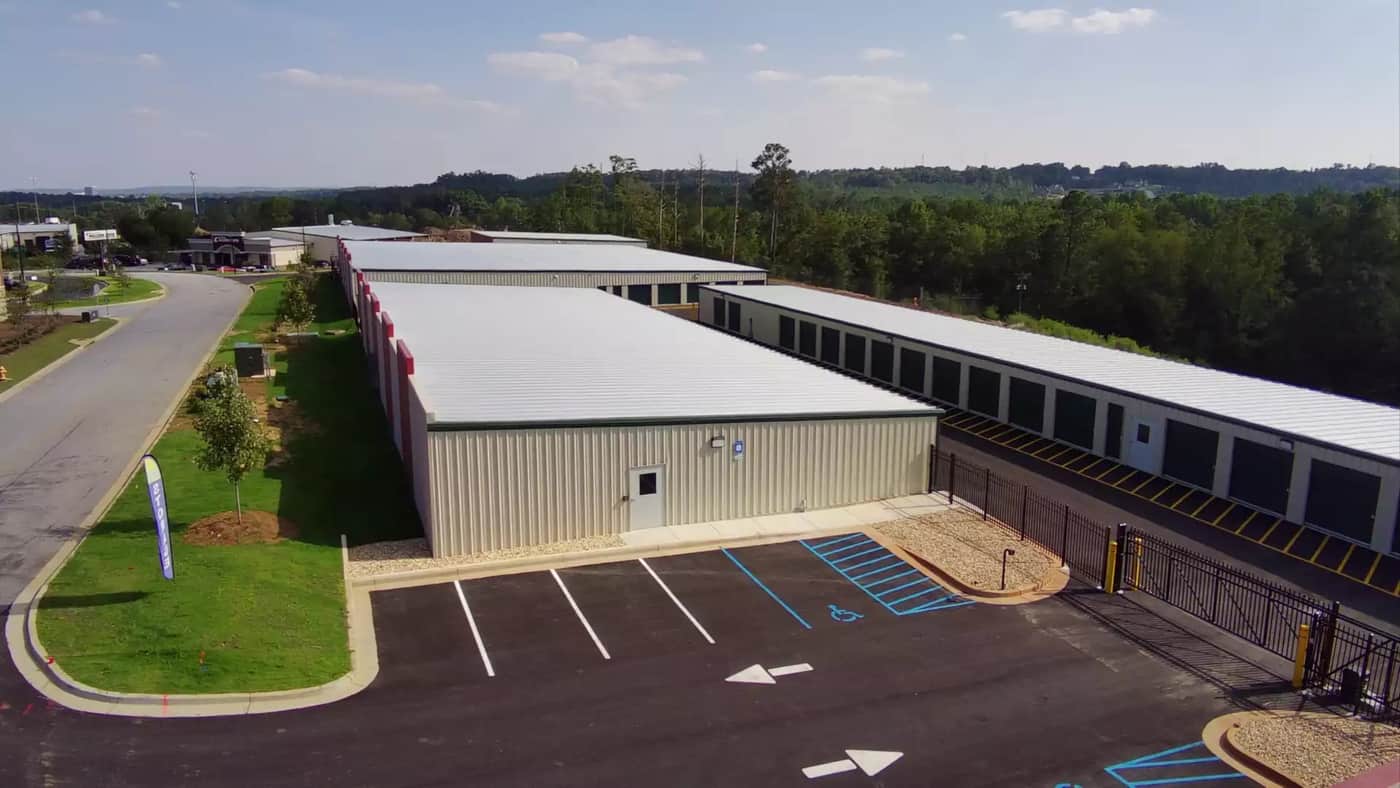
  • Standing-seam and screw-down metal roofs on classic drive-up storage rows. Metal is durable and sheds water well, but its weak points are the fasteners, the seams, and the panel laps. Over years of thermal movement and Gulf humidity, screws back out, washers dry and crack, and seams open up. We repair, re-fasten, and re-seal metal roofs, and when a roof is past that point we install metal restoration coating systems or full replacements.
  • Where storage roofs leak, and why it costs so much
  • The danger with self-storage is that a leak can travel. Water enters at a failed seam or fastener, runs along the deck or the underside of metal panels, and shows up in a unit two or three doors away from the actual breach. By the time a tenant reports wet boxes, the damage is done and the source isn't obvious. That's why our work concentrates on the places where storage roofs actually fail:

Seams, laps, and end-of-panel terminations on metal roofs

Fasteners and the washers that age out long before the panels do Ridge caps, eaves, and the transitions where roof planes meet

Schedule a roof review
Self Storage Roofing in Houston, TX
Downtown Houston commercial rooftops

Penetrations for vents and any rooftop equipment on climate-controlled buildings

Drains, scuppers, and gutters that have to move serious volume during a coastal downpour

Because a leak here lands directly on customer property, prevention pays for itself. A documented, well-maintained roof is also a meaningful point in how a facility competes, especially for the climate-controlled tenants who are paying a premium precisely because they expect their belongings to stay safe and dry.

Houston Energy Corridor commercial buildings

Built for Gulf Coast storms

Houston's weather is the reason storage roofs need to be more than adequate. The summer and fall bring the threat of named storms, and hurricane season from June through November regularly sends wind and torrential rain across the metro. Harvey in 2017 showed how much water this region can absorb in a single event, and storage facilities, with their long roof runs and large drainage demands, are exposed to both the wind uplift and the sheer rainfall volume. Hail is another recurring hazard that dents metal panels and bruises membranes, and the year-round heat and UV slowly degrade every sealant and coating on the roof.

We specify storage roofs to stand up to that environment: wind-rated attachment on both metal and membrane assemblies, watertight detailing at every seam and penetration, and drainage that's sized and kept clear so a stalled storm doesn't pond water over occupied units. Reflective surfaces help the climate-controlled buildings hold temperature without overworking their equipment through the hottest stretches of the year.

Roof planning notes

Working around an operating facility

Talk with a Houston commercial roofing team

Inspections and maintenance that prevent claims

Storage facilities run seven days a week, and tenants need access to their units. We plan reroofs and major repairs to keep driveways and unit access open wherever possible, phase the work across the property, and keep the site clean and free of debris and stray fasteners that could puncture a tire or create a hazard. Coordinating with on-site management keeps disruption to a minimum and keeps customers moving in and out without a roofing project getting in their way. The most cost-effective roof is one that's watched. We offer scheduled inspections, seasonal cleanouts of drains and gutters around hurricane season, and fastener and seam checks on metal roofs before small failures become unit leaks. For multi-site operators, we can survey an entire portfolio, flag the highest-risk buildings, and help build a maintenance and replacement plan that protects every location on a sensible budget. Staying ahead of the roof is far cheaper than settling claims and refunding tenants after the fact.

Storm response when a facility takes a hit

When a tropical system or a hailstorm rolls through, a storage operator needs the roof secured fast before water finds its way into occupied units. We handle emergency tarping and temporary repairs to stop active leaks, then come back for permanent work once conditions allow. Just as important, we document the damage thoroughly. Self-storage claims often hinge on showing what the storm did versus what was already worn, so the photos, measurements, and notes we take give an owner real footing with an insurer rather than a he-said dispute about the roof's prior condition. For a single-asset owner or a regional operator alike, having a roofer who can both respond in the moment and back the claim afterward takes a lot of pressure off a bad week. Talk with a Houston commercial roofing team