Skip to content

Government Building Roofing in Houston, TX

Schedule a Roof Review

  • Roofing for public buildings across the Houston region
  • A county courthouse, a branch library, a fire station, a water-treatment control building, a transit operations center — these are the buildings that have to stay open the day a storm rolls off the Gulf, not the week after. We work on government and institutional facilities throughout Harris County and the surrounding municipalities, and the constant across all of them is that the roof protects something the public cannot do without. When a permitting office floods, residents can't pull a permit. When a 911 dispatch center takes water over a server room, the consequences are immediate. Our work on these roofs is centered on that reality from the first walkthrough.
  • Most public buildings in the Houston area are low-slope structures with large, uninterrupted roof areas — single-story administrative buildings, big-footprint libraries and community centers, multi-acre maintenance and fleet facilities. Those wide membrane fields take the full force of the Gulf Coast: wind uplift during the June-through-November hurricane season, large hail off the squall lines that march across the region every spring, and a punishing year-round heat-and-UV load that ages a roof faster here than almost anywhere else in the country. A municipal roof specified for a milder climate will not make its rated service life on a Houston rooftop, and we plan replacements and re-covers with that gap in mind.
  • How public-sector roofing work is different
  • Roofing a government building is as much a procurement and documentation exercise as it is a construction one, and we treat it that way. Public projects in Texas typically run through a formal solicitation — competitive sealed bids or proposals, or a job-order or cooperative-purchasing contract — and the paperwork that travels with the work matters as much as the workmanship. We assemble the submittal package the way a project manager or facilities director needs to receive it.
  • Prevailing-wage compliance. Public works in Texas carry prevailing-wage requirements, and we keep the certified payroll and labor documentation that go with them, so a project closes out clean.
  • Procurement-ready proposals. We respond to sealed bids and proposals with the line-item detail, bonding, and insurance documentation a public solicitation calls for, and we work within cooperative purchasing vehicles where an agency uses them to shorten the path to award.
  • Specification and warranty records. Manufacturer system warranties, fastening patterns, and material data sheets are documented and handed over so the facility carries a complete record for the life of the roof.
  • Capital-planning support. When a roof is heading toward end of life but isn't there yet, we provide the condition assessment and remaining-service-life estimate that a facilities team needs to defend a line item in a capital budget.

Building code and wind design on the Gulf Coast

Public buildings in the Houston area are designed and permitted to demanding wind-load standards, and a roof replacement has to meet the design pressures the structure was engineered for. We specify membrane attachment — fully adhered, mechanically fastened, or ballast-free hybrid systems — to the uplift requirements at a building's height, parapet condition, and exposure, with particular attention to the perimeter and corner zones where wind pressures concentrate and where most storm failures actually begin. Edge metal and coping are detailed and secured to recognized standards, because a roof that loses its perimeter flashing in a windstorm loses the whole field shortly after. Keeping an occupied public building running

Schedule a roof review
Government Building Roofing in Houston, TX
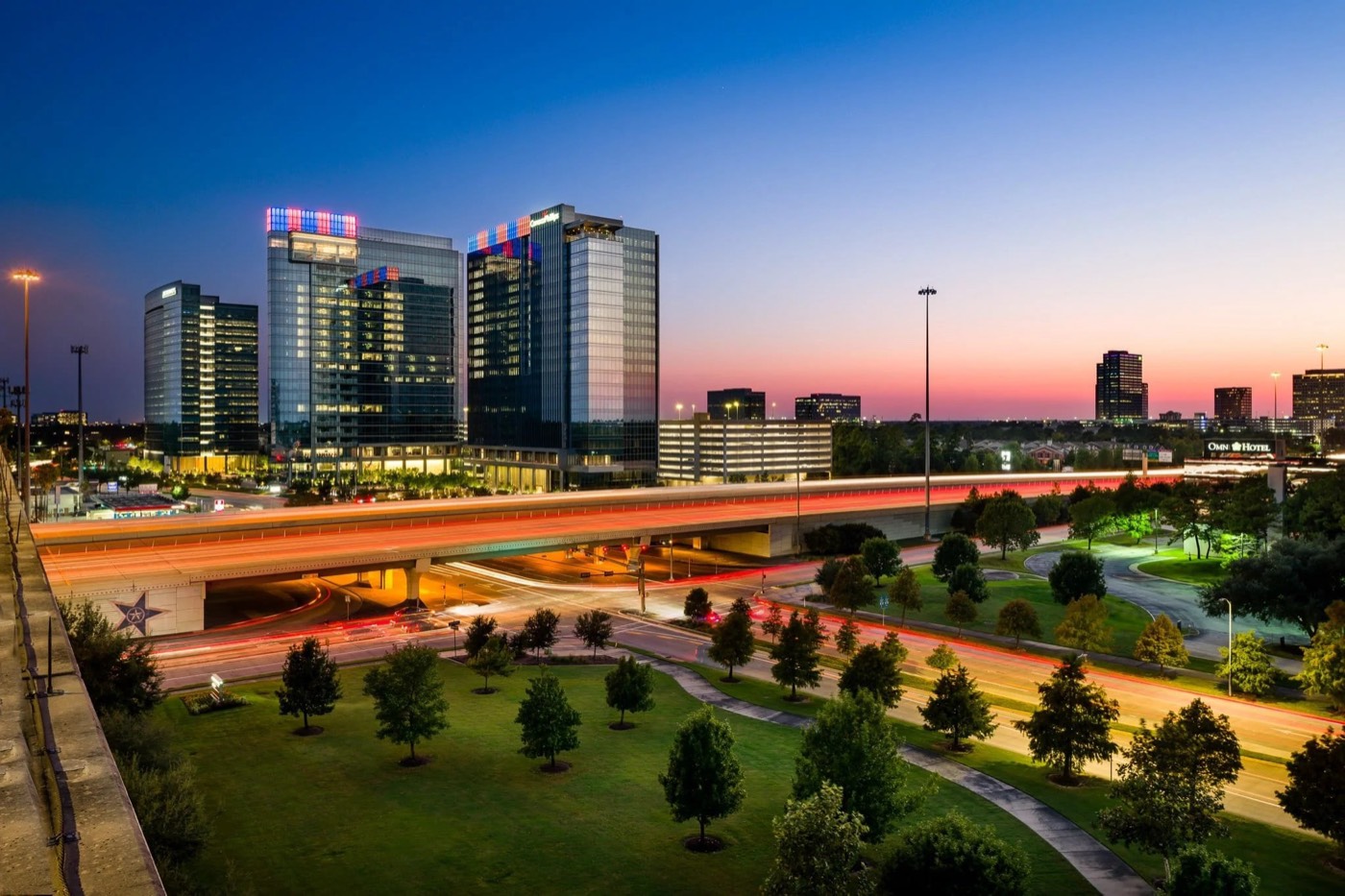
Downtown Houston commercial rooftops

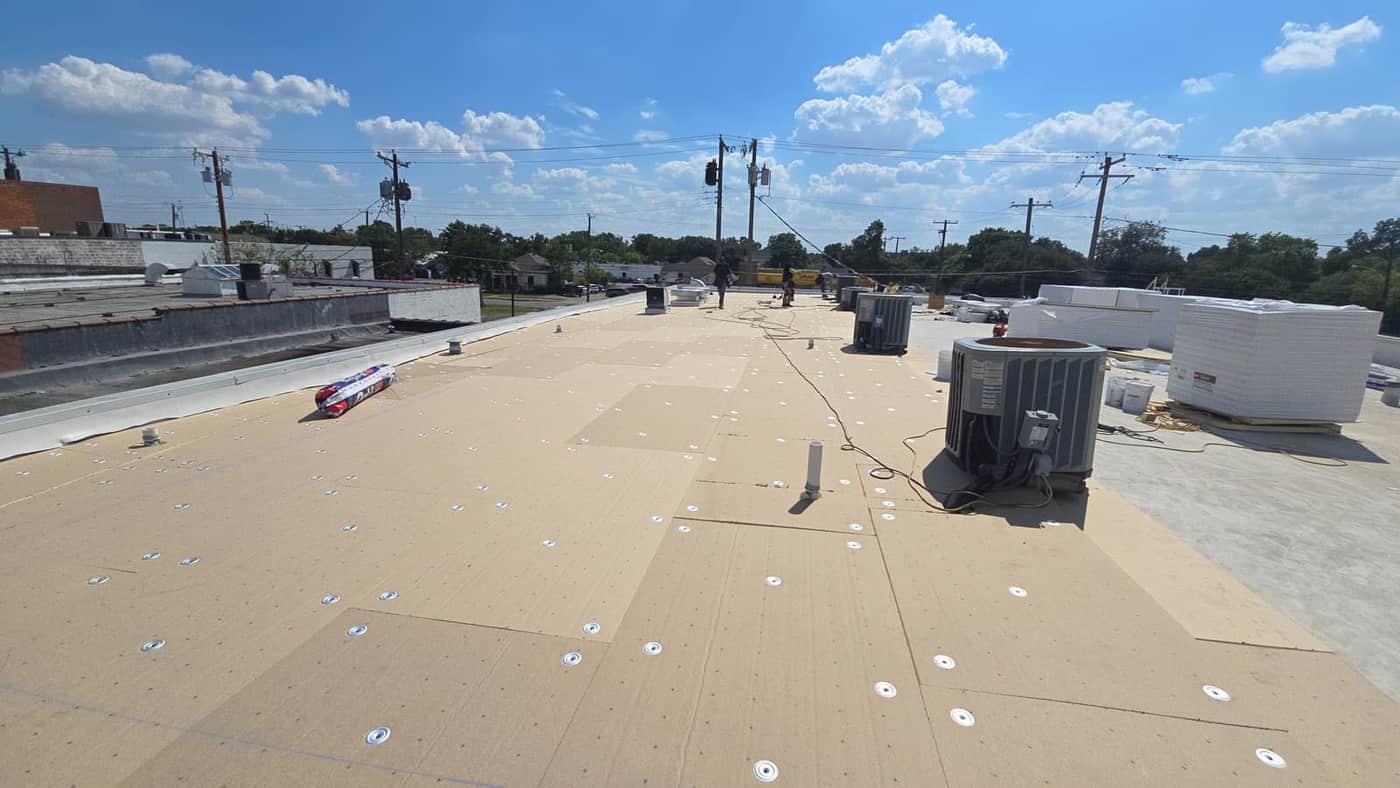
A courthouse can't close for a re-roof. A library branch stays open to the public, a fire station has to roll apparatus at any hour, and a public-safety building runs three shifts a day. We sequence work on occupied government facilities so the building keeps functioning underneath us. That means staging tear-off in sections small enough to be dried-in the same day, never leaving an open deck exposed to an afternoon thunderstorm, and protecting interior spaces and equipment below from dust and debris. Crews and material loads are routed away from public entrances, drop-off lanes, and emergency-vehicle bays. Where a department is sensitive to noise or vibration — a courtroom in session, a 911 floor, a clinic — we schedule the loudest phases around it.

Coordination with the facilities staff runs through the whole job. We agree on roof access, lay-down areas, crane and lift placement, and security and badging requirements before mobilization, so a crew on a secured campus isn't an interruption to operations. On buildings with restricted or sensitive areas, we plan our access to respect them.

Drainage built for Houston's rainfall

Houston Energy Corridor commercial buildings

This is one of the flattest, rainiest large metros in the country, and a public roof has to shed water fast and completely. Hurricane Harvey put a generational rainfall on the region in 2017 and exposed how unforgiving standing water is on a low-slope roof — ponding adds dead load, accelerates membrane breakdown, and finds the smallest seam failure. We evaluate positive drainage on every roof we touch, add tapered insulation to break up ponding where the deck has gone flat, and size and place drains, scuppers, and overflow provisions to move a Gulf Coast downpour off the roof. Where a site falls under Harris County Flood Control District or local drainage requirements, we keep roof drainage consistent with how the site is engineered to handle stormwater, rather than dumping volume in the wrong place.

Membrane systems we install on government roofs

The right system depends on the building, the budget cycle, and how long the roof has to last, and we match the assembly to the facility rather than to a single product line.

Roof planning notes

Roof Scope Notes

Talk with a Houston commercial roofing team

Roof coatings and restoration. A reflective coating system that extends the life of a sound existing roof, defers a full capital replacement, and can renew a manufacturer warranty — often the most defensible spend when a budget cycle is tight.

Modified bitumen. Multi-ply redundancy and proven puncture resistance for roofs with heavy foot traffic, rooftop equipment, and frequent service access. Metal roof repair and restoration. Fastener, seam, and coating work for the standing-seam and metal roofs common on civic and recreational buildings.

Request a roof assessment

If you manage municipal, county, or institutional buildings anywhere in the Houston area, we're glad to walk your roofs and give you a clear, documented picture of where they stand — current condition, remaining service life, and the work that will carry a facility through the next storm season. Reach out whenever it's useful and we'll set up an assessment that fits your schedule and your procurement process. Talk with a Houston commercial roofing team