
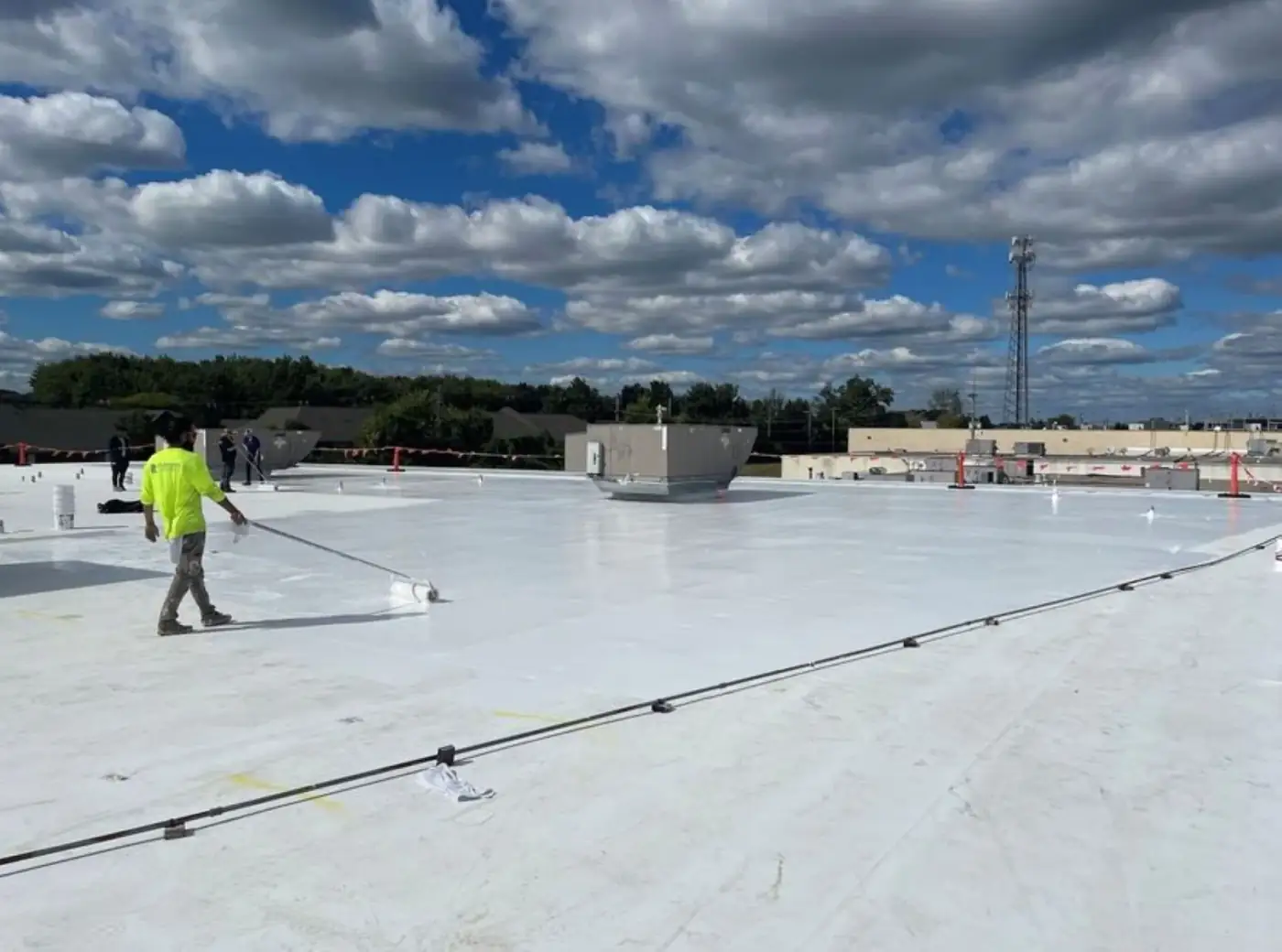

A cooler roof also eases the load on rooftop HVAC units, which on a hot black roof are sitting in a pool of radiant heat while trying to reject heat from the building. Lowering the surface temperature around those units lets them work in a less hostile environment, and equipment that is not constantly maxed out tends to last longer and need fewer mid-summer service calls during the exact stretch when downtime hurts most.
The savings on a utility bill are the headline, but the change tenants actually feel is the temperature on the top floor. In buildings with occupied space directly under the roof, the difference between a dark membrane radiating heat downward and a reflective one rejecting it shows up as fewer hot-spot complaints, more even cooling, and air handlers that are not pinned at full output through the afternoon. For multi-tenant offices in the Westchase District or single-story spaces across the Energy Corridor, that comfort difference is part of keeping tenants happy and equipment from running itself into the ground. Pairing Reflectivity with Solar-Ready Design