
Skip to content

Commercial roofing for Houston hotels, resorts, and hospitality properties — Galleria, downtown, and airport corridors. Reroofing that keeps guests in rooms.

Schedule a Roof Review

  • Roofing for Houston Hotels, Resorts, and Hospitality Properties
  • A hotel cannot empty out for a reroof. Guests are sleeping below the work at every hour, conference space is booked months out, and a single leak into a guest room means a comped night, a bad review, and an out-of-service room that stops earning. We reroof hospitality properties with the building staying open — staging the work to keep noise, dust, and disruption away from guests while we replace or restore the roof above them.
  • Greater Houston runs one of the busiest hospitality markets in the South, with hotel clusters around the Galleria and Uptown, downtown's convention district, the Energy Corridor and Westchase business corridors, the Medical Center, and the two airport corridors. The properties range from limited-service flagged hotels with simple low-slope roofs to full-service convention hotels and resorts with sprawling roof fields, rooftop pools, and bars — and we roof across that whole range.
  • Reroofing While the Hotel Stays Open
  • Keeping a hotel operating through a roof project is mostly about sequencing and discipline:
  • Wing-by-wing phasing — we break the roof into zones so a block of rooms can be sold while the section above another block is being torn off and rebuilt, then move on. Housekeeping and the front desk get the schedule so rooms can be sold around the active zone.
  • Quiet-hours planning — the loudest phases, tear-off and fastening, are scheduled for daytime when occupancy is lowest and guests are out, not during checkout mornings or late at night.
  • Clean staging and guest routes — materials, debris chutes, and crane picks are kept away from the porte-cochere, pool decks, and entrances so the arrival experience stays intact.
  • Odor control — over occupied floors we favor low-odor systems and methods, and coordinate with engineering so adhesive smells do not reach rooms through rooftop air intakes.

Roof Systems for Hospitality Buildings

Most Houston hotels are flat or low-slope, run air conditioning nearly year-round, and carry a lot of rooftop equipment. The heat and UV here push us toward reflective systems on most properties: TPO and PVC single-ply — white reflective membranes that lower rooftop heat gain and cut the cooling load on a building full of conditioned guest rooms. PVC is our default around rooftop kitchen and bar exhaust, where grease would degrade other membranes.

Schedule a roof review
Hotel & Hospitality Roofing Contractor | Houston, TX
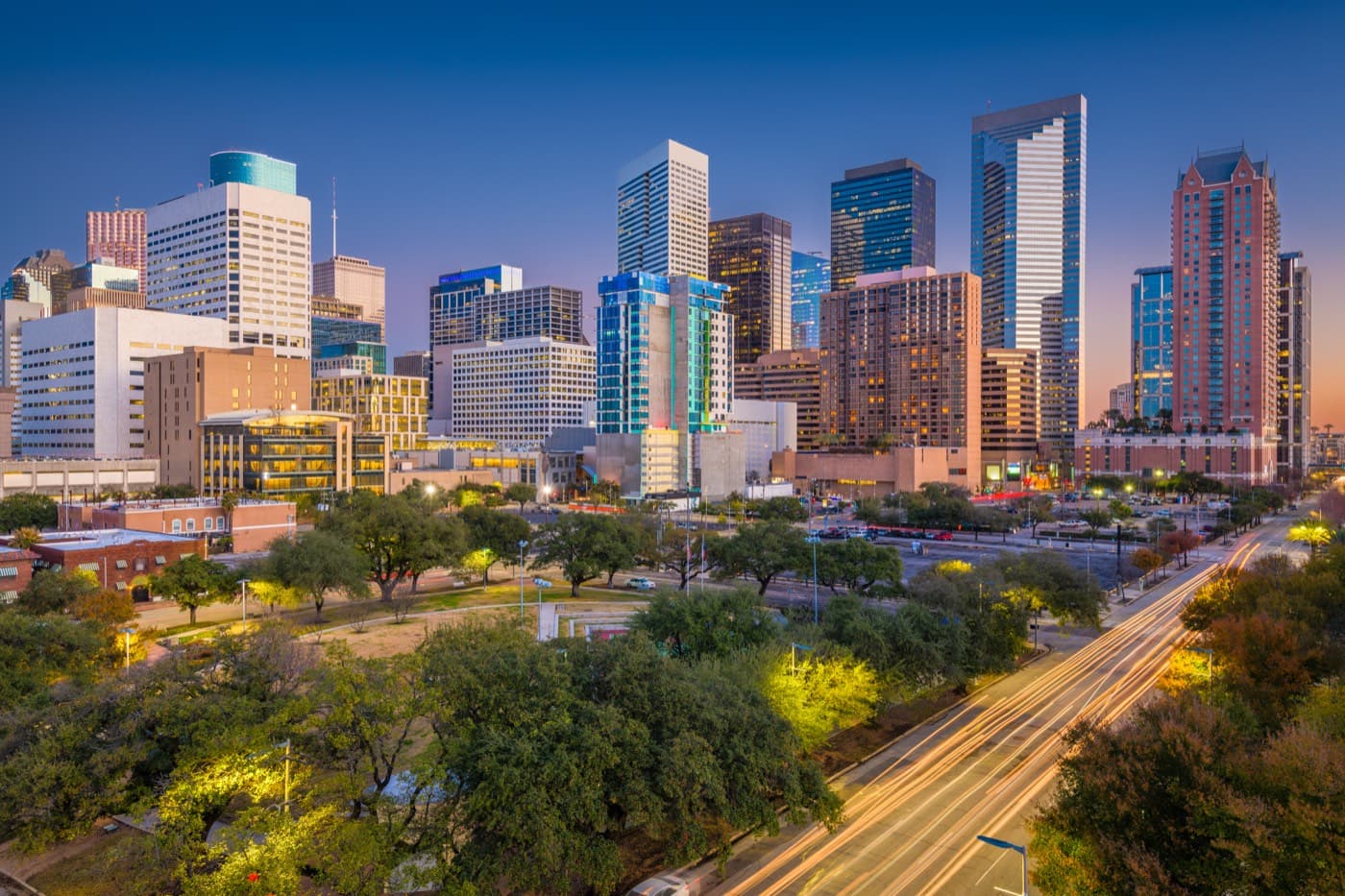
Downtown Houston commercial rooftops

Modified bitumen — a durable multi-ply option for roofs with heavy foot traffic from staff servicing rooftop units, and for amenity decks.

Silicone and acrylic coatings — restoration systems that renew a sound roof and restore reflectivity without a full tear-off, which keeps disruption to guests low and fits an owner's capital timing.

Standing-seam and architectural metal — for sloped roofs, mansards, porte-cocheres, and the signature elements that define a property's curb appeal.

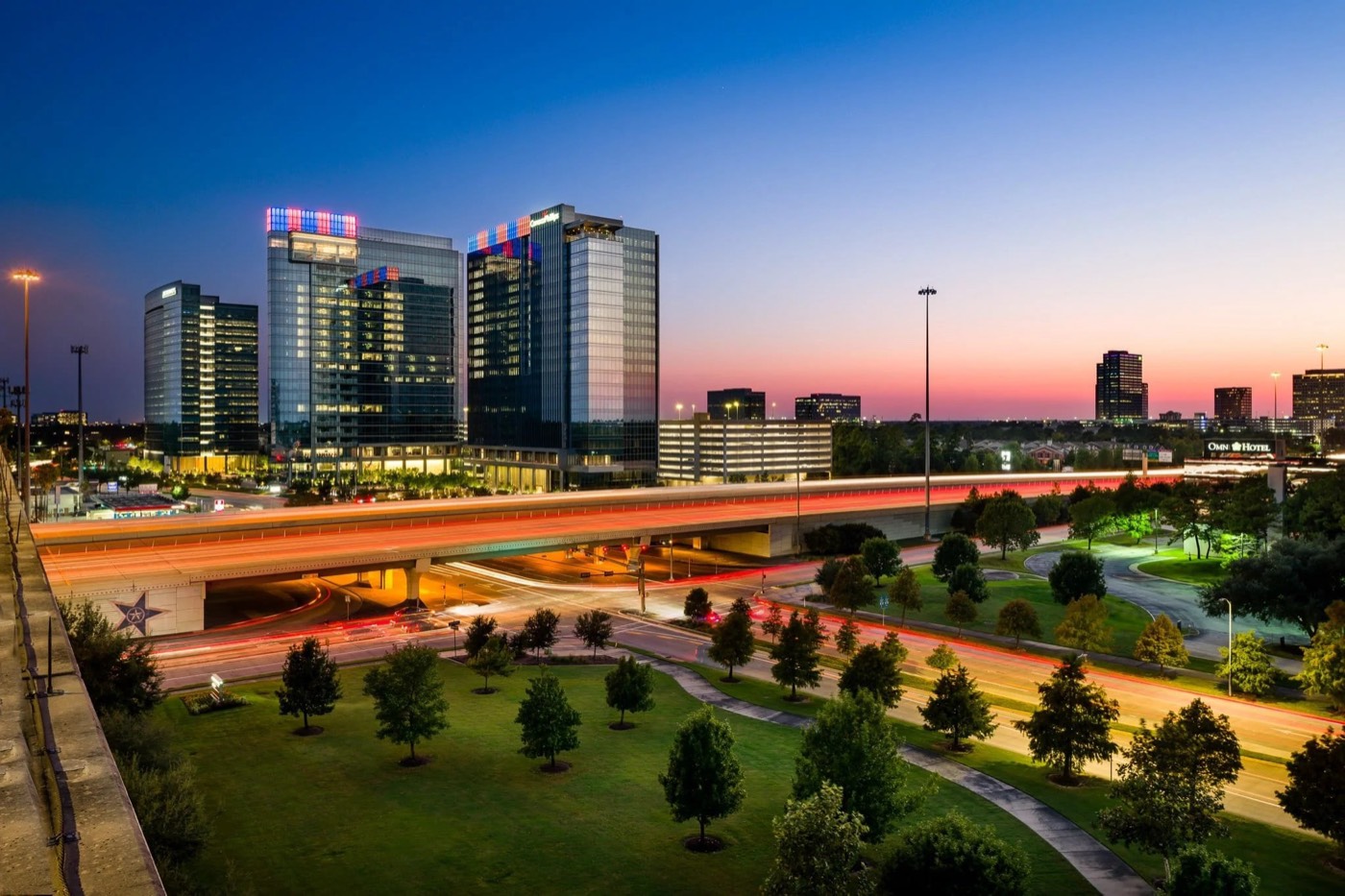
Houston Energy Corridor commercial buildings

Rooftop Amenities and Equipment

Full-service and resort properties put pools, bars, lounges, and event terraces on the roof, and those amenity decks are roof assemblies that have to stay watertight under foot traffic, planters, and pavers. We detail waterproofing under amenity decks and around pool equipment so the spaces below stay dry. Every hotel roof is also crowded with the mechanicals that keep guests comfortable — packaged HVAC units, kitchen exhaust, makeup air, and laundry vents — and each penetration is a leak path we detail individually. We protect and work around live equipment so heat, cooling, and kitchen exhaust keep running while the roof is replaced.

A rooftop bar or event terrace is also a revenue space and a guest-facing one, so the waterproofing under it cannot announce itself with a stain on the ceiling of the suite below. On these decks we separate the waterproofing layer from the wear surface, build positive drainage into the assembly, and detail the perimeter and every drain so water moves off the deck during a Gulf Coast cloudburst instead of finding the room beneath. Where planters and irrigation sit on the roof, we treat them as permanent wet spots and flash accordingly, because a slow leak under a planter can run for months before anyone connects it to a guest complaint two floors down.

Roof planning notes

Storm Resilience for Hospitality Properties

Talk with a Houston commercial roofing team

Protecting the Guest Experience and the Brand

The Gulf Coast hurricane season runs June through November, and a hotel is one of the worst places to be caught with a failing roof when a named storm fills the building with stranded guests and evacuees. We detail edge metal, parapet caps, and membrane attachment to resist the wind uplift that strips poorly fastened roofs in a hurricane, and we specify impact-rated assemblies on properties exposed to the large hail this region sees. Drainage matters as much as the membrane: Houston's intense downpours and the flat hotel roofs common here make ponding water a real risk, so we correct drainage and verify positive flow to outlets sized for Gulf Coast rain. After a storm we run prompt post-event inspections and document conditions so ownership has a clear record for insurance and can keep rooms in service. Flagged properties answer to brand standards and quality-assurance inspections, and a stained ceiling or a leak complaint shows up in guest surveys fast. We treat the reroof as part of protecting that brand: clean job sites, crews briefed to be unobtrusive around guests, and a finished roof that ends the leak history rather than buying a few more years of buckets in the hallway. The goal is a guest who never knew the roof was being replaced over their head.

Portfolios and Extended-Stay Properties

Many Houston hotels belong to ownership groups or management companies that run several properties across the metro — a few near the airports, a couple in the Energy Corridor, others by the Galleria or the Medical Center. For those owners we can treat the roofs as a portfolio: survey each property, document system and condition, and plan replacements and restorations across a few budget cycles so the worst roofs get attention first and capital is not spent on a roof that still has years left. Catching a roof with a coating before it needs a full tear-off is often the difference between a manageable expense and a major one, and across a portfolio those decisions add up. Talk with a Houston commercial roofing team