

Skip to content

Commercial roofing for breweries and distilleries across Greater Houston. Corrosion- and steam-resistant membranes, leak repair over tanks and taprooms, and storm response.

Schedule a Roof Review

  • Brewery and distillery roofing across Greater Houston
  • A working brewery or distillery is a tough environment for a roof, and not only from the weather above. Inside, the building generates heat, humidity, and steam from the brewhouse and still. Exhaust fans push warm, moist, sometimes acidic air up through roof penetrations. Below the membrane sit fermentation tanks, bright tanks, barrels, packaging lines, and a taproom full of guests, all of which react badly to water from above. We roof breweries and distilleries throughout Greater Houston and Harris County with both the climate and the production environment in mind.
  • Houston's craft scene has grown into former warehouses, light-industrial bays, and purpose-built production buildings scattered from the east side near the Ship Channel to the neighborhoods around the inner loop and the suburbs beyond. Many of these are older flat-roofed structures that were never designed for the moisture load a brewery adds, and the roofs show it. We assess each building for how production is actually affecting the assembly, then build a roof that can take both the inside and the outside.
  • The double load on a brewery roof
  • From outside, a brewery roof faces everything every other low-slope building in the region does. Gulf Coast hurricane season drives wind and rain at the membrane edges and flashings. Large hail bruises and splits aging surfaces. The long, intense heat and UV bake the membrane and run up the cooling load over a building that is already fighting its own internal heat. And when heavy rain stalls over Harris County, the roof has to clear that water fast or it ponds, sits, and finds a seam.
  • From inside, the production process attacks the roof in ways an ordinary tenant never does. Warm, humid air rises and collects under the deck, and where insulation and vapor control are weak, condensation forms and quietly degrades the assembly. Exhaust from the brewhouse, cellar, and grain handling can carry moisture and mild acids that corrode metal flashings, fasteners, and equipment curbs over time. Steam and heat around still and kettle penetrations stress the membrane right where it is sealed to the roof. A roof that ignores this internal load will fail early no matter how good the membrane is.
  • What we account for on a brewery or distillery
  • Steam and heat rising off the brewhouse and still
  • Moist, sometimes acidic exhaust that corrodes flashings and fasteners

Condensation under the deck from high interior humidity

Heavy rooftop equipment for cooling, glycol, and exhaust The taproom, tanks, barrels, and packaging line below the membrane

Schedule a roof review
Brewery & Distillery Roofing | Houston, TX Commercial Roofers
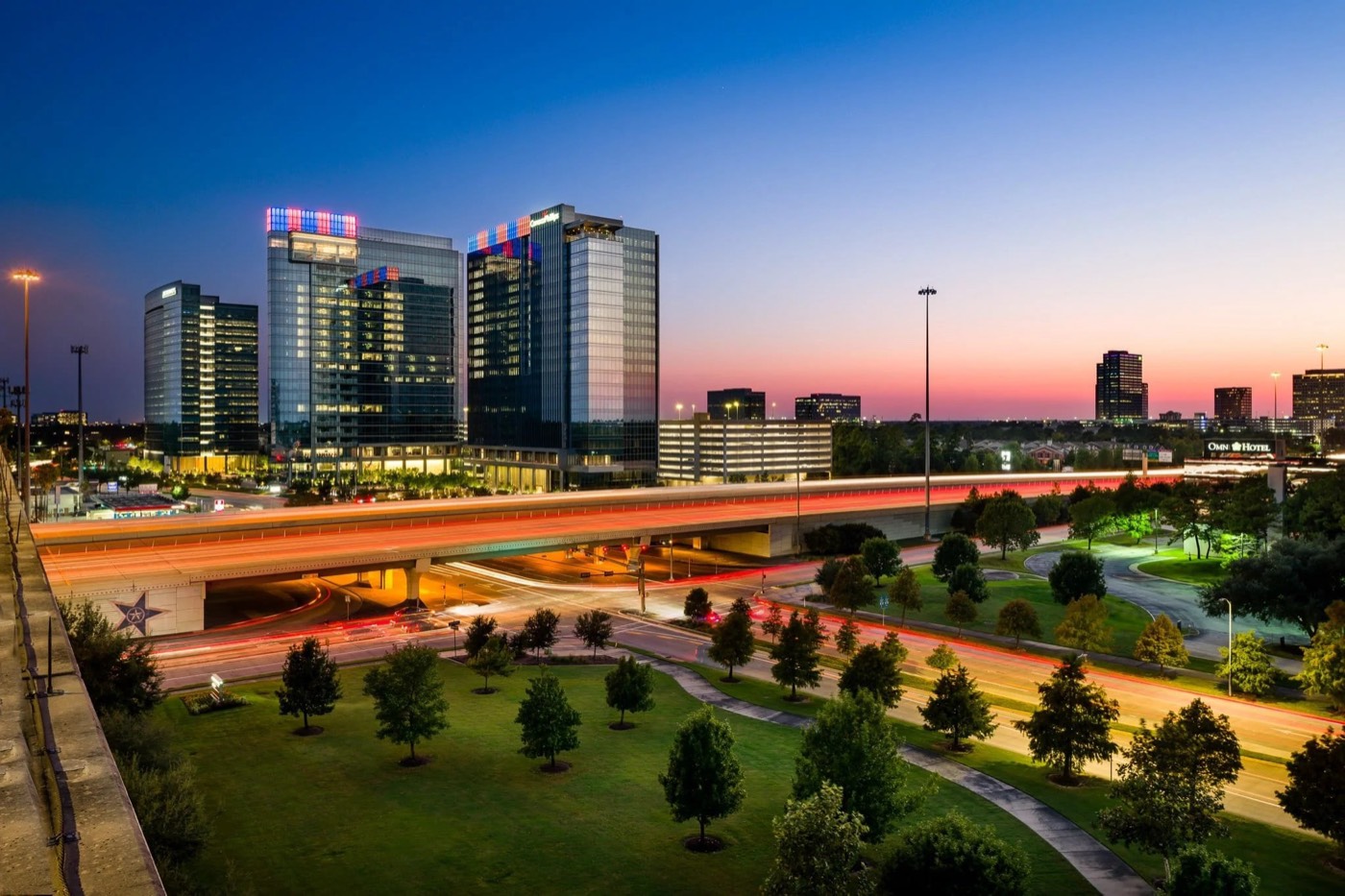
Downtown Houston commercial rooftops

Roof systems built for production buildings

For most breweries and distilleries in the Houston area we favor welded single-ply membranes that resist both the climate and the process. PVC stands up especially well to grease, mild chemical exposure, and the kind of warm moist exhaust a production building throws off, and its heat-welded seams give a continuous watertight field with no adhesives to break down. TPO is a strong reflective option on larger, simpler roofs where chemical exposure is lighter, reflecting solar heat back off a building that is already managing a lot of its own.

Detailing matters more here than almost anywhere. We pay close attention to the flashings and curbs around exhaust stacks, steam vents, and equipment, using corrosion-resistant metals and reinforced membrane terminations where the production environment is most aggressive. Where an existing roof is sound but tired, a silicone or acrylic coating can seal the field, add reflectivity, and extend service life without shutting down production. On older built-up or metal roofs, restoration coatings are often the least disruptive way to buy years.

Houston Energy Corridor commercial buildings

Systems and details we work with

PVC single-ply for chemical, grease, and exhaust resistance

Reflective white TPO on larger, lower-exposure roof fields

Roof planning notes

Roof Scope Notes

Talk with a Houston commercial roofing team

Cleanliness is non-negotiable over a food and beverage operation. We control debris, protect open tanks and ingredient areas from anything falling off the roof, and keep our crew to agreed access points away from production and guest spaces. Material staging and the crane go where they will not block deliveries, loading docks, or taproom access.

Brewing and distilling run on schedules that do not pause for a roof. We plan the work around brew days, packaging runs, and barrel handling, sequencing the loudest demolition and fastening for windows when production allows it and the taproom is closed. Where we have to work above active tanks or the bar, we keep the membrane dried-in so nothing below is ever exposed when weather moves in, and we coordinate closely so staff can cover or clear sensitive equipment. Talk with a Houston commercial roofing team