

Skip to content

We install Sika Sarnafil PVC single-ply roofing on Houston commercial, industrial, and Medical Center buildings built for heat, chemicals, and Gulf storms.

Schedule a Roof Review

  • Sika Sarnafil PVC Roofing for Houston Commercial Buildings
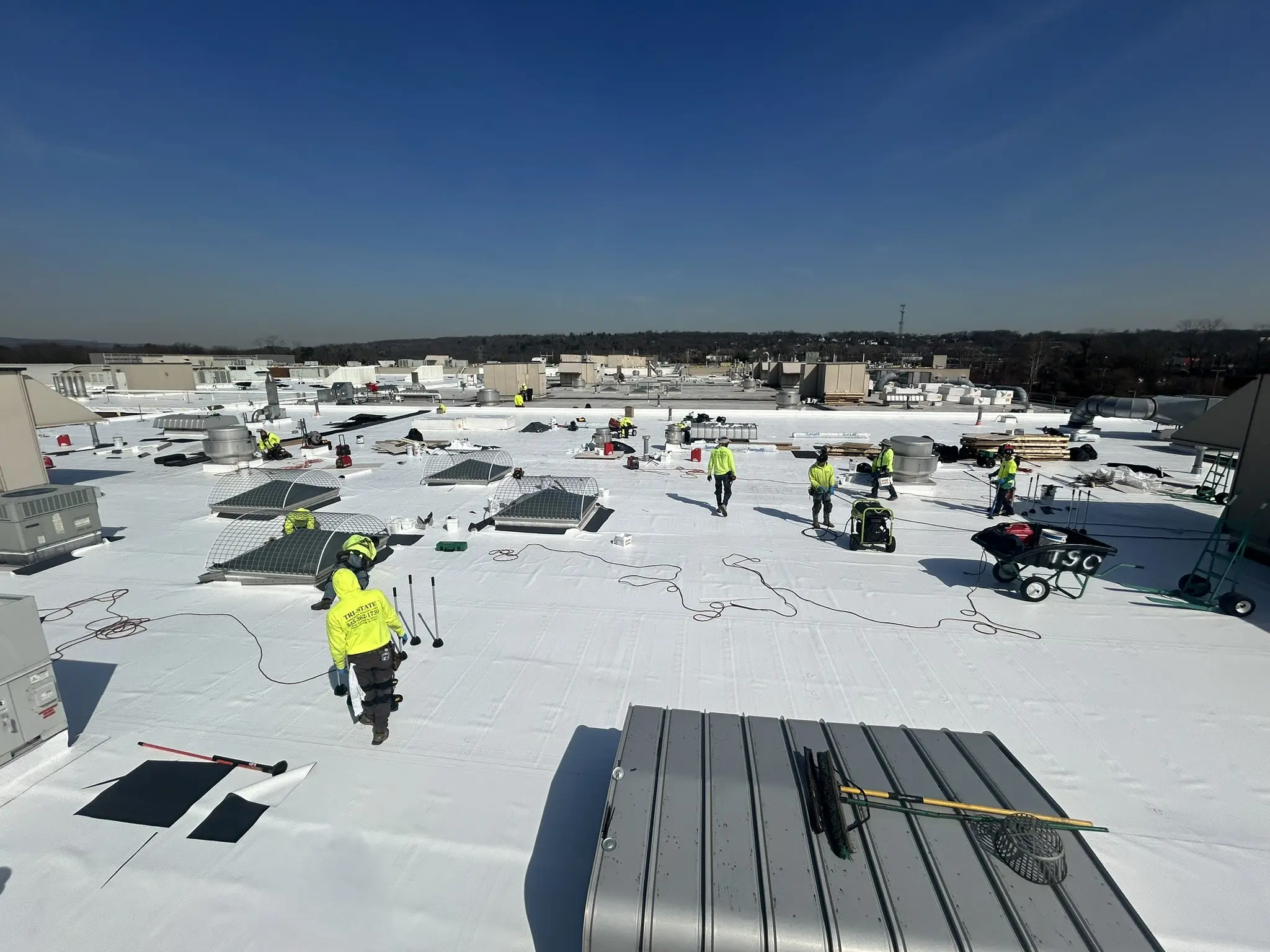
  • We install Sika Sarnafil PVC single-ply roofing on commercial and institutional buildings throughout Greater Houston, including the kind of large, complex roofs found across the Texas Medical Center, downtown high-rises, and industrial sites along the Port of Houston. Sarnafil is a hot-air-welded PVC membrane, which means every seam is fused into a continuous, monolithic sheet rather than taped or glued. On a roof that has to survive Gulf Coast wind-driven rain and standing water after a tropical downpour, welded seams are one of the strongest defenses against leaks that a low-slope roof can have.
  • The buildings where Sarnafil tends to be the right call are the ones with the highest stakes underneath the roof: hospitals and research space in the Medical Center, data and telecom rooms, food and beverage plants, and any facility where a leak does real damage. We install it where reliability and chemical resistance justify a premium membrane.
  • Hot-Air-Welded Seams Built for Houston Rain
  • The defining feature of a Sarnafil roof is the seam. We weld the laps with hot air so the overlapping sheets fuse at the molecular level, producing a bond that is as strong as the membrane itself. That continuous weld matters in Houston because so many of our roofs are dead-flat and shed water slowly, and because storms here drop several inches of rain in a matter of hours. A welded PVC field gives water nowhere to wick in, even where the roof ponds before it drains.
  • We probe and inspect every weld as we go, checking the laps for full fusion so the finished roof is verifiably watertight before we leave it. On large Medical Center and downtown roofs with hundreds of penetrations, that seam-by-seam discipline is what keeps a complex roof from becoming a maintenance problem the first time a hurricane parks over the city.
  • Reflectivity and Heat Performance
  • Sarnafil's reflective membranes carry a bright white surface that pushes solar heat back off the roof, which is exactly what a Houston building needs from May through September. On a hospital or office tower where rooftop chillers and air handlers run nearly year-round, a reflective PVC roof lowers the rooftop temperature, eases the cooling load, and helps the building hold interior conditions during the worst of the summer. The membrane is engineered to keep its reflectivity and flexibility over a long service life rather than chalking and stiffening early under ultraviolet exposure.
  • High-reflectance white surface that reduces rooftop heat gain

Roof planning guidance

Stable performance through intense, sustained Gulf Coast summer heat and UV Cool-roof benefits for buildings with heavy, continuous HVAC demand Long-term flexibility that resists cracking as the membrane ages

Schedule a roof review
Sika Sarnafil PVC Roofing Installed in Houston, TX | Commercial Roofing
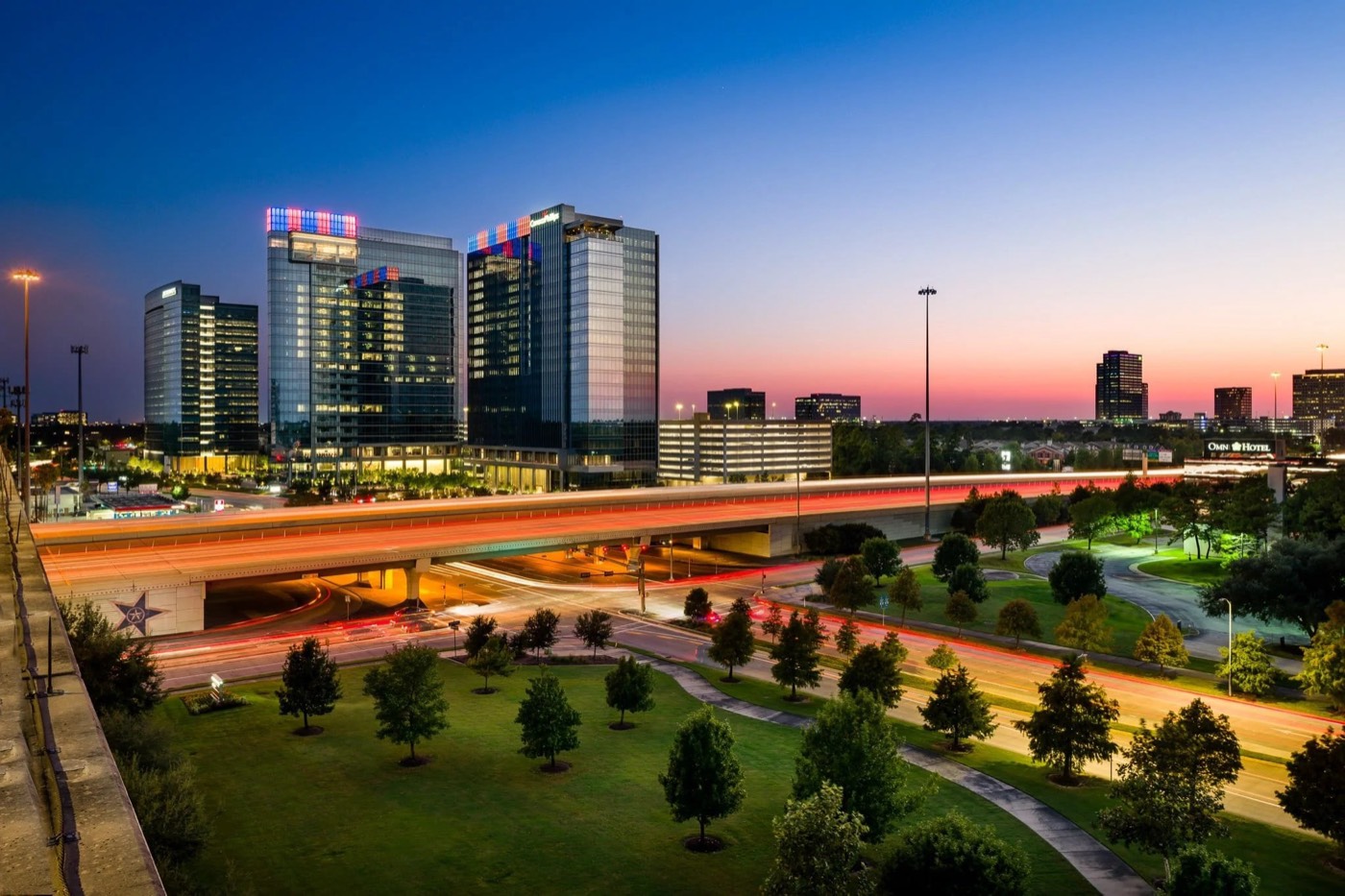
Downtown Houston commercial rooftops

Chemical and Grease Resistance for Industrial Houston

PVC has an advantage that matters along the Houston Ship Channel and at food-processing and manufacturing plants: it resists chemical exposure and grease far better than many other single-ply membranes. Rooftop exhaust at a restaurant commissary, a food plant, or an industrial building deposits grease and airborne contaminants that degrade lesser roofs over time. Sarnafil's chemical resistance lets it stand up to that exposure, which is why we specify it on facilities where the air coming off the roof is harder on the membrane than the weather is.

For petrochemical-adjacent and industrial buildings in the east-side belt, that resistance, paired with welded seams and strong wind performance, makes Sarnafil a membrane we can stand behind in conditions that would shorten the life of a cheaper roof.

Houston Energy Corridor commercial buildings

Wind Performance for the Gulf Coast

Houston sits in a coastal high-wind zone, and any roof we install has to be detailed for hurricane-force uplift. We install Sarnafil in mechanically attached and fully adhered systems, choosing the attachment method based on the deck type, building height, and exposure. Perimeters and corners get enhanced attachment because that is where wind uplift concentrates during a tropical system, and the welded field means there are no taped seams to peel back when the wind gets under an edge.

Mechanically attached and fully adhered systems matched to the building

Roof planning notes

Reinforced perimeter and corner detailing for coastal wind exposure

Talk with a Houston commercial roofing team

Where Sarnafil fits in Houston

A large share of our Sarnafil work is reroofing buildings that have outlived an older membrane or built-up system. We remove or recover the existing roof depending on its condition and the deck, install new insulation to bring the assembly up to current thermal and code expectations, and weld a fresh PVC field across the whole roof. On occupied buildings like Medical Center facilities and downtown offices, we phase the work to keep the interior dry and operations running, sealing tie-ins each day so an afternoon thunderstorm never reaches the space below. Talk with a Houston commercial roofing team