
Acrylic reflective coatings for cool-roof performance
Seam and flashing reinforcement on weathered low-slope roofs Ponding-area treatment where standing water collects after Gulf storms
Reroofs over aged ballasted or built-up systems that no longer reflect...
Schedule a roof reviewMule-Hide EPDM for Long-Term Membrane Life
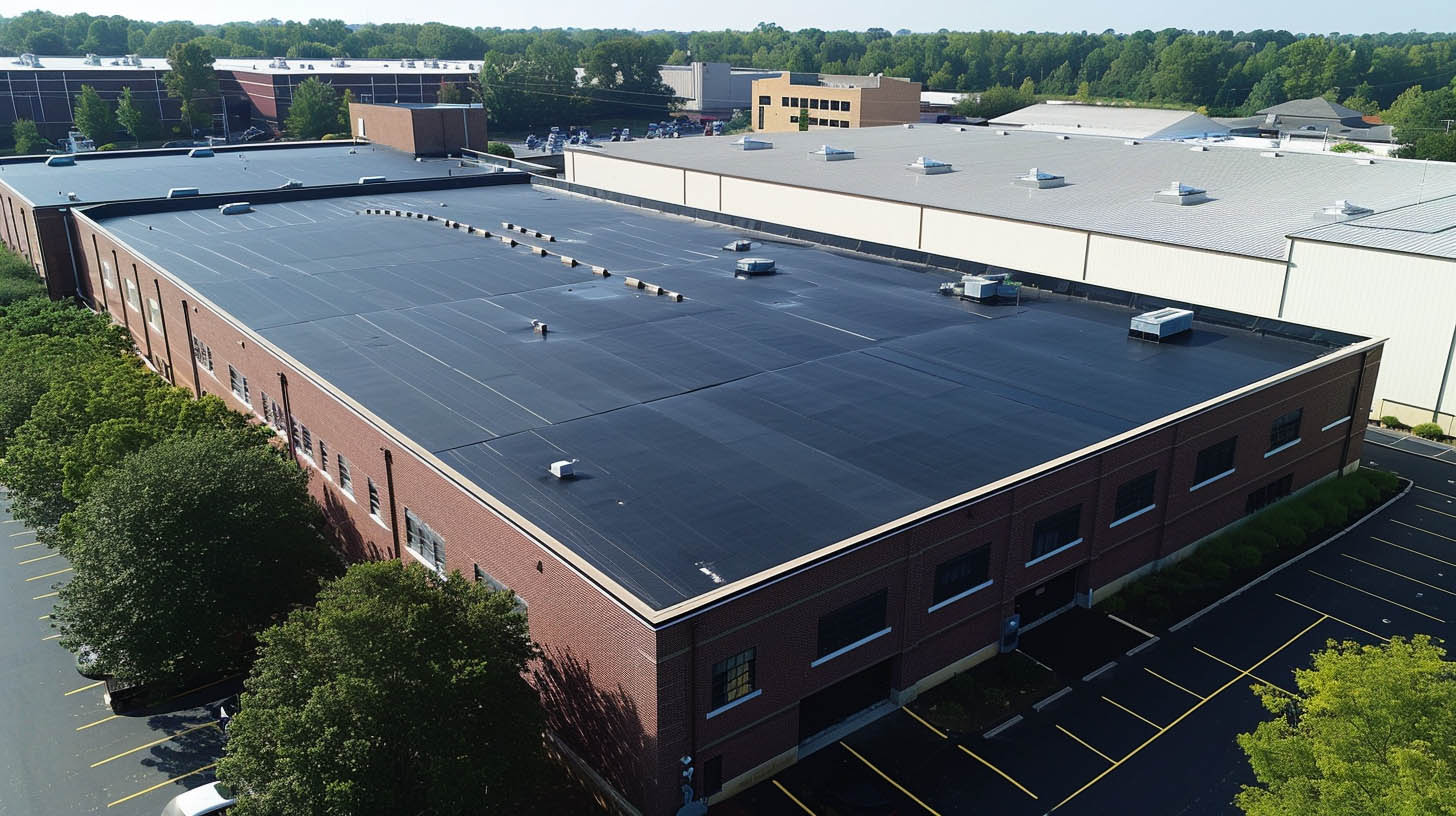

EPDM still earns its place on certain Houston roofs, and Mule-Hide's EPDM line covers both black and white formulations along with the seam tapes and accessories that make a modern EPDM roof watertight. EPDM handles thermal cycling and ultraviolet exposure well over a long service life, which suits buildings where the owner plans to hold the asset for decades and wants a membrane with a proven track record in heat.
We typically specify EPDM where a roof has unusual geometry, heavy penetration density, or a maintenance plan that favors a field-repairable membrane. The seam technology Mule-Hide supplies lets us build durable, factory-quality laps in the field, and EPDM's flexibility makes it forgiving around the clusters of pipes, curbs, and conduit that crowd older Houston industrial roofs.

Not every Houston roof needs to be torn off. When a low-slope roof is structurally sound but weathered, we use Mule-Hide's silicone and acrylic coating systems to restore the surface, seal aging seams, and add a fresh layer of reflectivity without sending an old membrane to the landfill. Silicone in particular holds up to the ponding and standing water that Houston's flat roofs see after heavy rain, since it does not break down the way some coatings do under prolonged moisture.
A Mule-Hide coating restoration is often the right answer for an owner in the Galleria area or downtown who needs to extend a roof a number of years before a planned capital reroof, or who wants to lower cooling bills on a building that is otherwise performing. We power-wash and prep the substrate, repair failed details and seams, reinforce around penetrations, and then apply the coating at the specified thickness so the finished surface carries the reflectivity and weather resistance the system is rated for.
Coating systems we apply
Roof planning notes
Seam and flashing reinforcement on weathered low-slope roofs Ponding-area treatment where standing water collects after Gulf storms
For roofs that need the redundancy of multiple plies, Mule-Hide's modified bitumen products give us a tough, layered system well suited to high-traffic areas and roofs with frequent mechanical service. We use these where a building owner wants the puncture resistance of a multi-ply assembly, or on transitions and tie-ins where a membrane roof meets older built-up sections. The granulated cap sheets add a measure of hail and abrasion resistance, which is worth having in a region that takes regular hits from large hail during spring storm season. Talk with a Houston commercial roofing team