Skip to content

We install Holcim Elevate (formerly Firestone Building Products) TPO, EPDM, and polyiso on Houston commercial roofs, built for Gulf Coast heat, hail, and wind.

Schedule a Roof Review

  • Holcim Elevate systems we install on Houston commercial roofs
  • We install Holcim Elevate roofing systems on commercial and industrial buildings throughout Greater Houston. Holcim Elevate is the building-envelope line that was sold for decades under the Firestone Building Products name, and the products most owners know from that era — UltraPly TPO, RubberGard EPDM, and the ISOGARD polyiso insulation line — carry forward under the Elevate brand. The membranes and the underlying assembly components are the same kinds of single-ply systems we build on flat and low-slope roofs from the warehouse belt off Beltway 8 to office and medical stock near the Texas Medical Center.
  • What makes a manufacturer line worth specifying in this climate is not the logo on the box but how the assembly behaves under Gulf Coast conditions: year-round ultraviolet load, large hail out of Harris County thunderstorms, the wind uplift that comes with hurricane season, and the staggering rain totals a stalled tropical system can drop in a day. We choose the membrane, thickness, insulation, and attachment to match the roof in front of us, then install it to the method that holds up here — not to a generic spec written for a milder part of the country.
  • Reflective TPO for Houston heat and cooling load
  • UltraPly TPO is a white thermoplastic membrane, and on a large single-story footprint the roof is the dominant heat-gain surface. A reflective white sheet sends the bulk of incoming solar radiation back rather than absorbing it, which keeps the assembly cooler through a Houston August and takes load off the building's cooling system. A dark or aged roof can run far above air temperature on a clear afternoon, and that heat both drives utility cost and ages the roof faster.
  • TPO is sold in several thicknesses, and the number matters more here than in cooler markets. A heavier sheet carries a thicker layer of weathering compound above the reinforcing scrim — the portion of the membrane that takes UV, foot traffic, and hail impact before the scrim is ever exposed. On roofs that bake under intense sun and occasionally take damaging hail, that weathering reserve is the difference between a sheet that chalks and crazes early and one that holds its surface. We talk owners through the tradeoff honestly: a heavier membrane earns its premium on a long-hold building, a hail-prone exposure, or a roof dense with rooftop units, while a lighter sheet can be the right call on a simple, short-hold roof.
  • Hot-air-welded seams
  • TPO seams are joined with hot air, fusing adjacent sheets into one continuous watertight bond rather than relying on tape or adhesive at the laps. We probe the welds after they cool to confirm they are fully fused, because seams are where a single-ply roof leaks first if they are rushed. Drains, curbs, pipe penetrations, and the roof edge get flashed with compatible TPO accessories so the detail work meets the same standard as the open field.
  • EPDM where a rubber membrane fits the roof

Roof planning guidance

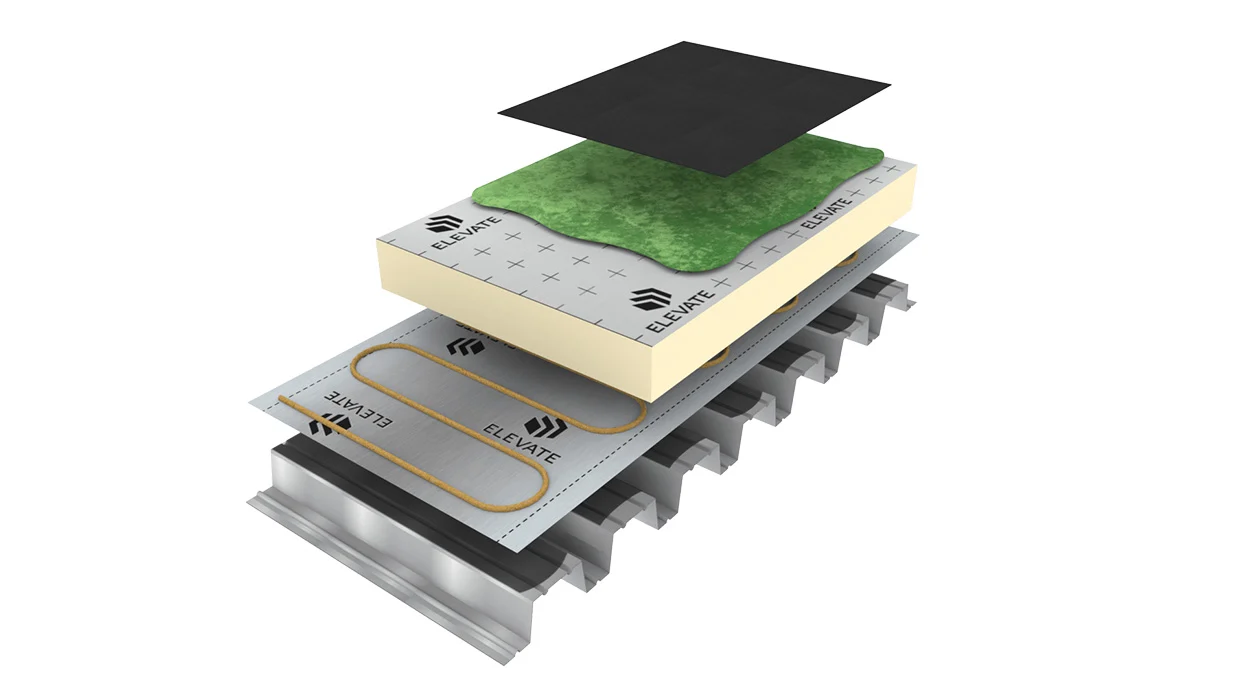
RubberGard EPDM is a synthetic-rubber single-ply membrane with a long track record on commercial roofs. EPDM stays flexible across a wide temperature range and handles thermal cycling and movement well, which suits certain Houston roofs — particularly assemblies with a lot of expansion and contraction, or owners who prefer a proven rubber system. Standard EPDM is black and absorbs heat, so where reflectivity and cooling load are the priority we steer toward a white membrane or a coating; where movement tolerance and puncture resistance lead the decision, EPDM can be the better fit. The point is to match the membrane to how the building actually behaves, not to install one chemistry on every roof. Insulation and cover board under the membrane A single-ply roof is a system, and what sits beneath the sheet determines how it performs in Houston rain and wind. We install ISOGARD or equivalent rigid polyiso insulation to the specified R-value, then a cover board over it. The cover board gives the membrane a firm, uniform substrate, improves hail and impact resistance, and adds fire and wind performance to the assembly. Cutting the cover board to save money is a false economy on a roof that has to survive hail and storm wind.

Schedule a roof review
Holcim Elevate Commercial Roofing Systems Installed in Houston, TX
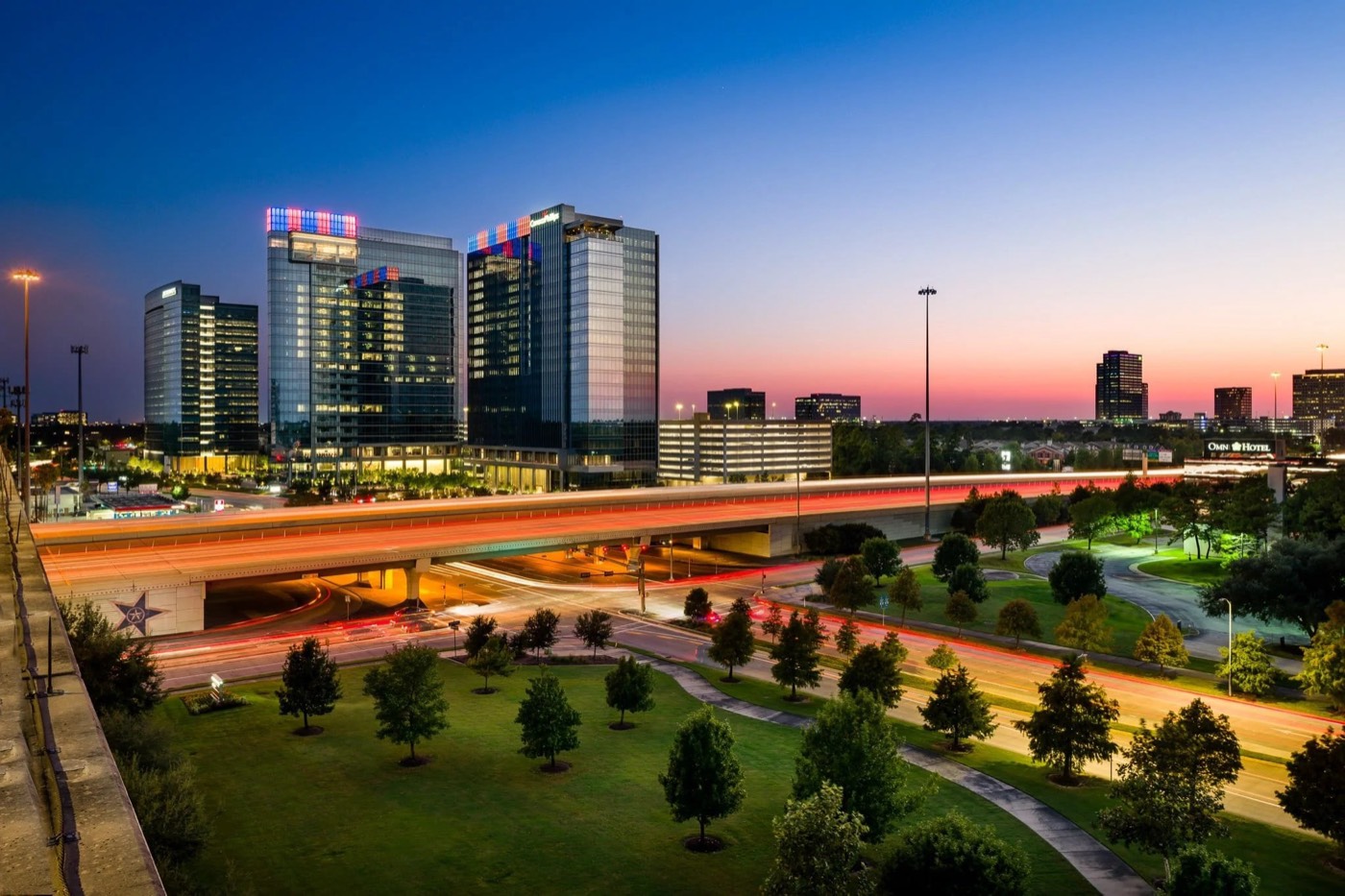
Downtown Houston commercial rooftops

Tear-off versus recover and the moisture question

Before anything new goes down we determine whether the old roof can stay or has to come off. After years of small leaks — or after a major rain event like Harvey in 2017 — an existing roof can hold trapped moisture in the insulation, and recovering over wet insulation only seals the water in. We use infrared or core-sample moisture results to make that call rather than guessing. When we tear off, we inspect the structural deck for corrosion and deterioration before installing new insulation, because a membrane is only as sound as what it is fastened to.

Attachment built for hurricane-season wind

Houston Energy Corridor commercial buildings

Greater Houston is hurricane country, and a roof here has to resist uplift during named storms and the strong straight-line winds that ride in on Gulf squall lines. We attach Holcim Elevate systems — mechanically fastened, fully adhered, or a hybrid — to meet the uplift demand for the building's height, exposure, and location. Perimeter and corner zones, where uplift concentrates, get enhanced attachment, because storm damage almost always starts at an edge or corner before it works into the field.

Drainage detailing for Houston rainfall

Few markets test a flat roof's drainage like ours. On the roof, standing water adds load, accelerates membrane aging, and finds any weak seam. We confirm that drains, scuppers, and overflow provisions can move water off the roof during a real downpour, add tapered insulation to push flow toward drains where the deck is dead-flat, and detail every drain and scupper so the most vulnerable points carry the heaviest flow. A heavier membrane tolerates incidental ponding better than a thin one, but the goal is always to get water off the roof, not to rely on the sheet to sit underwater between Harris County storms.

Roof planning notes

Where Holcim Elevate systems fit in Houston

Talk with a Houston commercial roofing team

Office and medical. Buildings in Westchase, the Galleria, and near the Texas Medical Center where tenant comfort and a long service life justify a heavier, cooler roof.

Warehouse and distribution. Large flat roofs off Beltway where reflectivity cuts cooling load and a thick membrane survives hail and crew traffic. Light industrial. Facilities where impact resistance and storm performance matter and re-roofing downtime is costly.

What we do not claim

Retail. Roofs crowded with rooftop units, where the weathering layer holds up around equipment and walk paths. Talk with a Houston commercial roofing team