

Skip to content

Commercial roofing for Houston hospitals, clinics, and medical campuses. Phased reroofing, leak control, and storm-resilient systems for healthcare facilities.

Schedule a Roof Review

  • Roofing focused on patient care, not around the calendar
  • Hospitals do not close. The roof over an operating suite, a pharmacy, or a server room that runs the electronic medical record cannot be treated like the roof over a strip center. We work with healthcare facilities across Greater Houston with that constraint front and center: the building stays occupied, the air-handling units keep running, and the work happens without putting patients, staff, or sterile environments at risk.
  • Houston carries one of the densest concentrations of medical real estate anywhere, rooted in the Texas Medical Center south of downtown and extended by satellite campuses, ambulatory surgery centers, and specialty clinics spread from the Energy Corridor to Clear Lake. Many of these buildings are large, low-slope, and stacked with rooftop equipment. The roof is rarely just a roof. It is a working deck carrying chillers, exhaust fans, medical gas vents, and dunnage for future expansion.
  • Why healthcare roofs fail differently
  • A leak in a warehouse is a nuisance. A leak above an imaging suite or a clean room is a shutdown. The roofs we maintain for healthcare clients tend to fail for reasons that have less to do with the membrane wearing out and more to do with everything mounted on top of it.
  • Penetration density. Medical buildings have far more roof penetrations per square foot than most commercial stock: gas vents, dedicated exhaust for labs and pharmacies, conduit for rooftop equipment, and constant additions as departments grow. Every penetration is a potential entry point, and on an aging roof the flashings around them go before the field does.
  • Equipment traffic. Mechanical contractors, low-voltage techs, and biomed staff are on these roofs constantly. Foot traffic and dropped tools puncture membranes. Without walkway protection, the paths to the most-serviced units wear through first.
  • Condensate and overflow. Large HVAC loads mean large condensate volumes. We routinely find roofs where condensate lines discharge directly onto the membrane, holding moisture and breeding ponding in a climate that already delivers heavy rain.
  • Humidity inside the assembly. Tight envelopes, high interior humidity in certain departments, and Houston's outdoor moisture load can drive condensation into the roof system if the vapor control and insulation are not detailed correctly.

Working in occupied, sensitive buildings

The difference between a routine reroof and a healthcare reroof is everything that happens around the actual roofing. We plan the project so that infection control and indoor air quality are protected throughout. Infection control and air quality

Schedule a roof review
Commercial Roofing for Healthcare Systems in Houston, TX
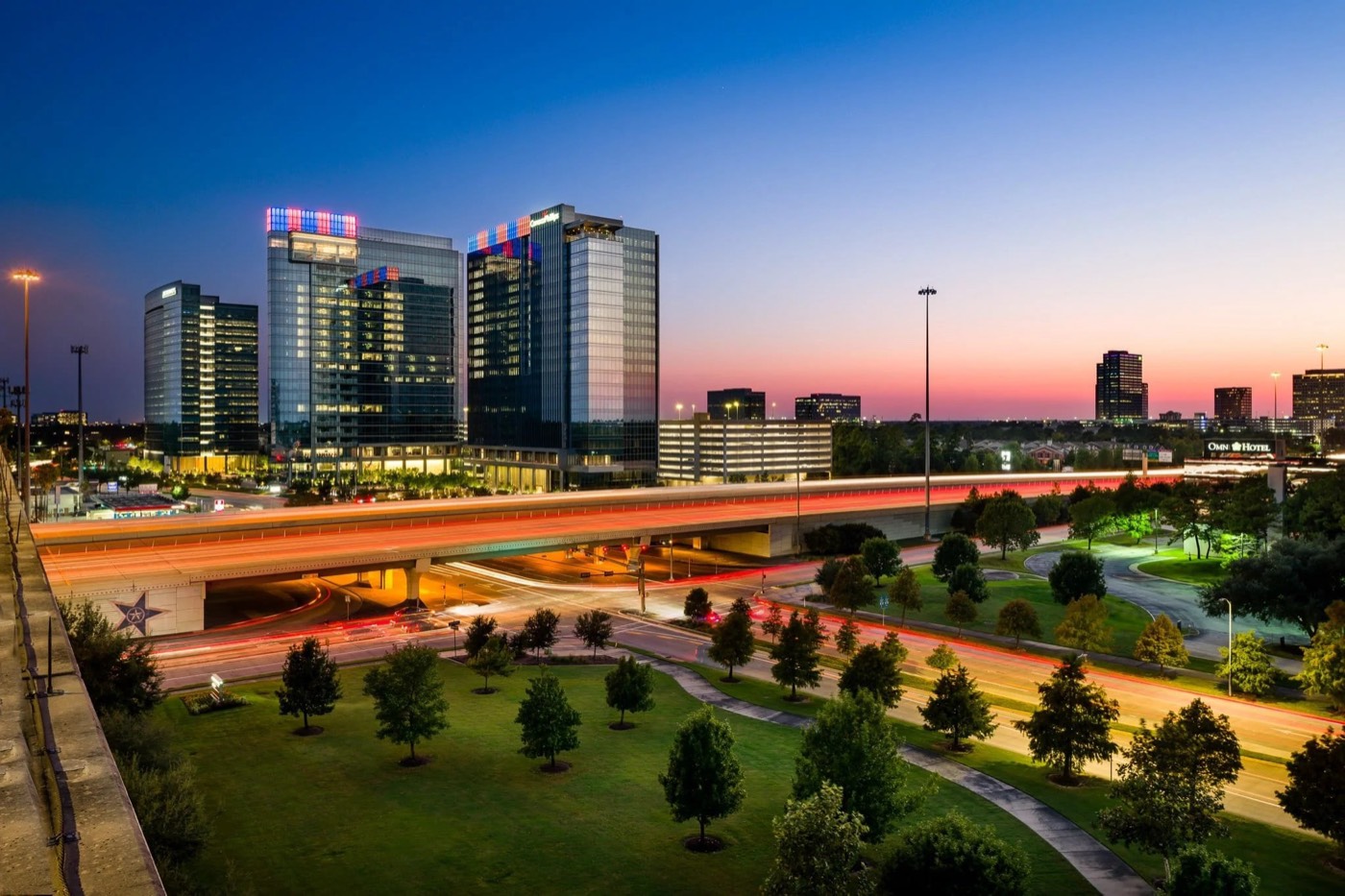
Downtown Houston commercial rooftops

Tear-off generates dust and odor. Above occupied patient areas, that matters. We coordinate with facilities staff on protecting and sequencing air intakes so that adhesive fumes and demolition debris are not pulled into the building, schedule odor-producing work around sensitive departments, and stage materials to keep dust contained. Where a facility runs an infection control risk assessment process for construction, we work within it rather than around it.

Sequencing around departments

An operating-room block, an ICU, and an outpatient clinic have different tolerances for noise and disruption. We phase the work zone by zone so that the most sensitive spaces below the roof are addressed during the lowest-impact windows. Night and weekend work is on the table when daytime operations cannot absorb the noise.

Houston Energy Corridor commercial buildings

Keeping the building watertight every night

On an occupied hospital, an open roof at the wrong moment during a Gulf Coast downpour is unacceptable. We never tear off more than we can dry in and make watertight before crews leave. Daily close-out and temporary water cutoffs are part of the plan, not an afterthought.

Storm exposure on the Gulf Coast

Roof planning notes

Roof Scope Notes

Talk with a Houston commercial roofing team

Hail and impact. On reroofs we steer clients toward systems and cover boards that hold up to impact, since hail events drive a large share of insurance claims across the metro.

Wind uplift. We specify and verify membrane attachment and edge metal for the wind loads this region sees, because a roof that lifts at the perimeter takes the rest of the field with it. Drainage capacity. Intense, fast rainfall overwhelms undersized drains. We assess primary and overflow drainage so water leaves the roof instead of ponding over critical spaces, and we keep scuppers and overflows clear as part of ongoing care.

Roof systems we use on healthcare buildings

Pre- and post-storm readiness. Before named storms, we help facilities button up loose components and document roof condition. After, we get on the roof quickly to find and stop active leaks before water reaches the floors below. Talk with a Houston commercial roofing team