
Document the Roof Before Spending
We separate urgent leak work from planned capital work with photos, measurements, roof access notes, and enough detail for ownership to make a practical decision.
Energy Corridor offices, Ship Channel industrial sites, corrosive-environment systems, storm-rated reroofs.
The corporate side of energy is a different scope, but it has its own non-negotiables.
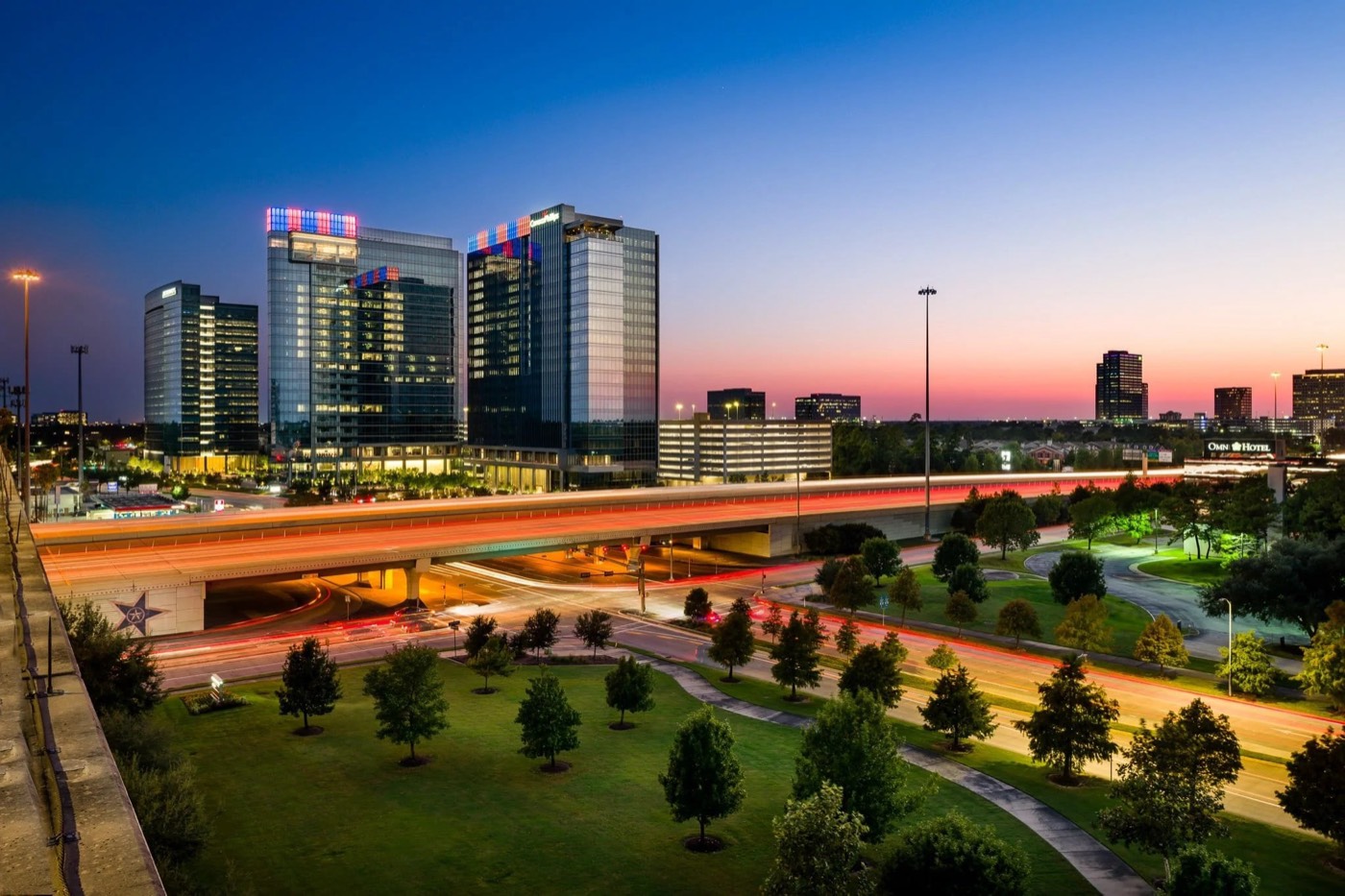
Schedule a roof reviewA roof over an Energy Corridor office sits above conditioned floors full of people and equipment, often with significant rooftop HVAC and sometimes data rooms that cannot get wet. We plan reroofs and repairs on these buildings as occupied-building work: sequencing the membrane in small, fully closeable sections, drying every opened area in before the afternoon, and keeping noise, fumes, and crane operations coordinated around a working office. A clear Houston morning can turn into a heavy downpour by mid-afternoon, so nothing over an occupied floor is ever left open to chance.
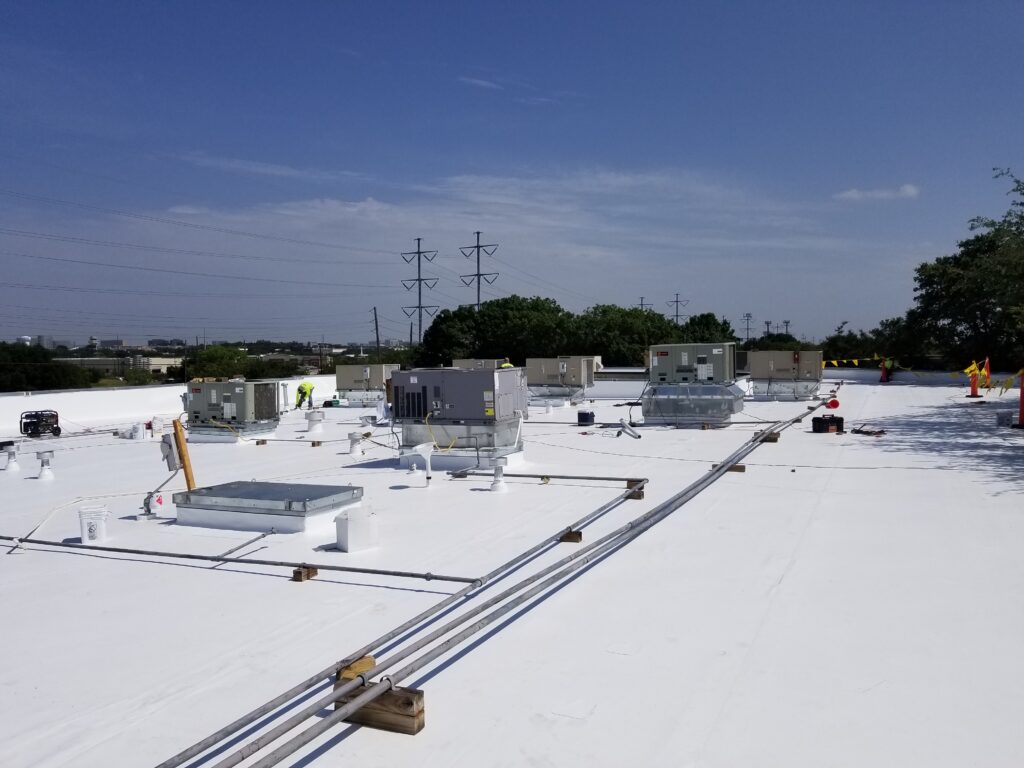
Whether it is an office on the Katy Freeway or a control building near a unit, cooling runs hard for most of the Houston year, and the roof drives a real share of it. A dark or weathered membrane radiates the long Houston summer straight into the building while the HVAC fights it. We steer energy facilities toward reflective white membranes and reflective coatings because a cooler roof surface means lower cooling demand - a recurring operating saving - and a slower-aging roof, since Houston's UV and daily thermal cycling are hard on membranes and seams. On a sound roof, a silicone coating can often extend service life and push out a disruptive replacement, which on an operating site is worth a great deal.

Houston sits in a hurricane corridor, and for energy facilities the consequences of a roof failure run well past water damage. The 2017 Harvey flooding across Harris County showed how exposed both office campuses and industrial sites are when storms hit, and on a process building a breach can threaten controls, electrical rooms, and operations that are expensive and dangerous to interrupt. On the roof, the failure mode we plan against hardest is wind uplift at perimeters and corners, where pressures peak and a lifted edge can peel a membrane and open the field to driving rain. We detail edge metal, parapet flashings, and fastening patterns for the Gulf Coast wind zone these buildings actually sit in.
For sites we maintain, we build a pre-storm and post-storm protocol: before a named storm, clearing drains and scuppers, securing loose components, and confirming perimeters are sound; after it passes, a prompt inspection for lifted edges, windborne-debris punctures, displaced equipment, and any water tracking toward critical areas - documented with photographs the facilities, reliability, and risk teams can act on immediately.
Flat industrial and office roofs both have to move serious water during a Houston storm. Harris County rainfall routinely overwhelms undersized or clogged drainage, and ponding both shortens membrane life and adds load. We confirm primary drains and overflow scuppers are clear and functioning, correct ponding with tapered insulation where standing water is the real problem, and make sure roof runoff is not discharging onto electrical equipment, transformer pads, or process areas below.
How we work with energy facilities and reliability teams
Roof planning notes
We separate urgent leak work from planned capital work with photos, measurements, roof access notes, and enough detail for ownership to make a practical decision.
Different roof areas carry different traffic, equipment, drainage, tenant, and weather risks. The scope should match those realities instead of treating the whole roof as one flat problem.