
Document the Roof Before Spending
We separate urgent leak work from planned capital work with photos, measurements, roof access notes, and enough detail for ownership to make a practical decision.
summer-window reroofs, occupied-campus leak repair, reflective cool roofs, and storm response.
Houston schools run their cooling hard for most of the year, and the roof drives a meaningful share of that load.
Schedule a roof reviewA dark or weathered membrane over a classroom wing pushes heat down into spaces that have to stay comfortable for students, while the air handlers fight it. We steer education facilities toward reflective white membranes and reflective coatings because a cooler roof surface means less heat gain and lower cooling demand through the long Houston summer - a recurring operating saving that matters to a district budget year after year.
Reflectivity also buys roof life, which is its own kind of budget relief. The intense UV and daily thermal cycling around Houston are hard on membranes, working seams and fasteners loose over time. A reflective roof runs cooler, ages more slowly, and can often be extended with a silicone coating instead of a disruptive replacement - a real advantage when the only practical work window is a short summer break and every avoided tear-off keeps capital available for the campuses that need it most.
Old patches, additions, and rooftop equipment
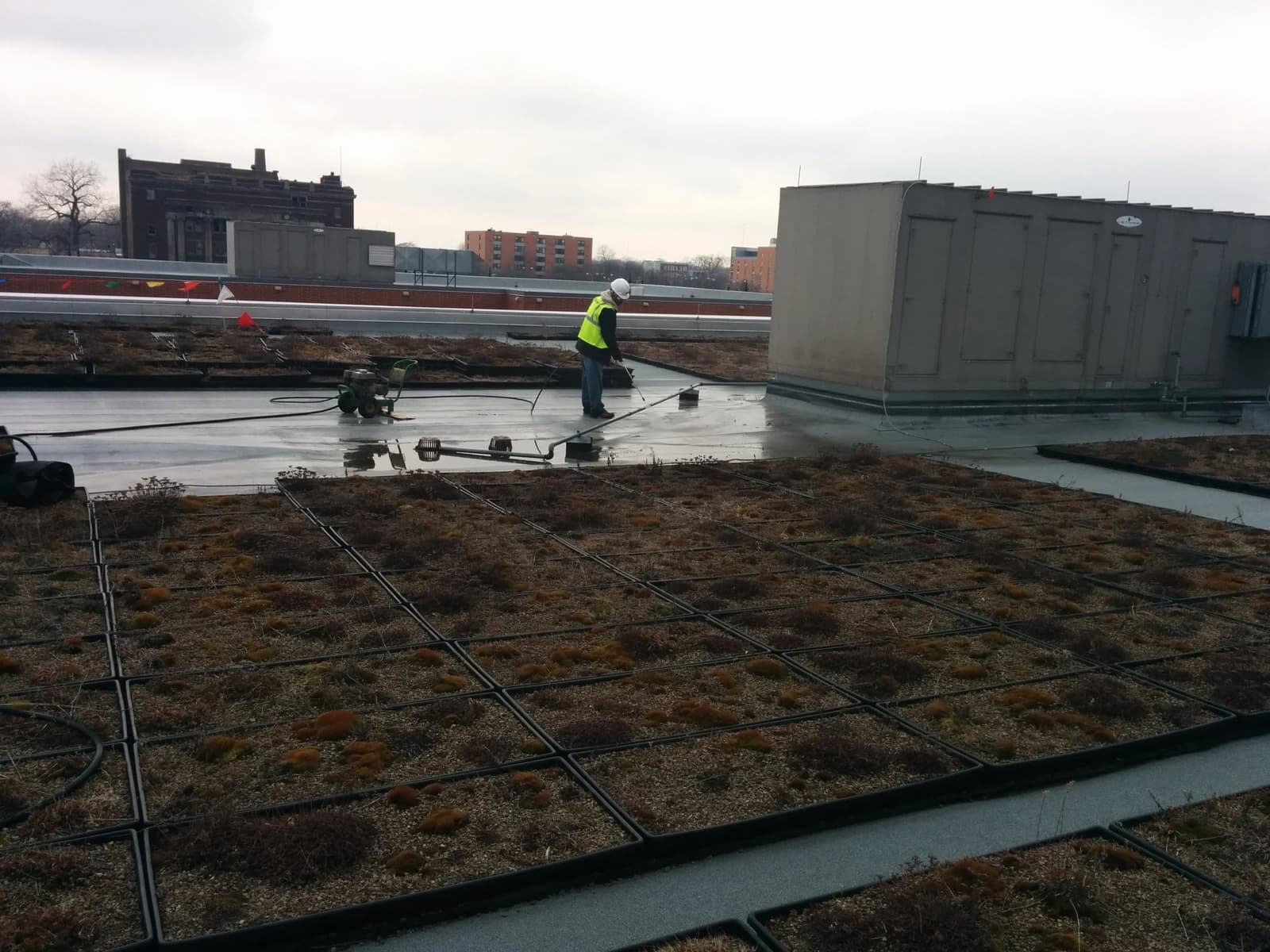

School roofs accumulate history. Portable-building tie-ins, HVAC replacements, added exhaust for science and culinary spaces, and years of small patches all create details that fail before the membrane field does. Many of the leaks we trace on campuses come from flashings around equipment that was added after the original roof, or from patch-on-patch areas that never got resolved. We inventory penetrations, rebuild flashings to survive Houston's heat cycling, and tell the facilities team plainly which details are sound and which are living on borrowed time.
The Gulf Coast hurricane season hangs over every Houston-area district, and the 2017 Harvey flooding showed how fast a school can go from operating to closed when water gets in. On the roof, the highest-risk failure is wind uplift at perimeters and corners, where a lifted edge can peel back a membrane and let driving rain into classrooms below. We detail edge metal, parapet flashings, and fastening for the wind environment these campuses actually sit in, and on roofs we maintain we build a pre-storm and post-storm routine: clear drains, secure loose components, and inspect promptly after a storm for lifted edges, debris punctures, and any water tracking into occupied space - with photos a district can use for its records and any insurance claim.

Flat campus roofs have to move a lot of water fast. Houston downpours and Harris County's drainage realities mean undersized or clogged drains turn into ponding, and ponding shortens membrane life and adds dead load over occupied rooms. We confirm primary drains and overflow scuppers are clear and functioning, correct ponding areas with tapered insulation where standing water is the real problem, and make sure roof runoff is routed away from entries and walkways where students move.
How we work with district and campus facilities teams
Roof planning notes
We separate urgent leak work from planned capital work with photos, measurements, roof access notes, and enough detail for ownership to make a practical decision.
Different roof areas carry different traffic, equipment, drainage, tenant, and weather risks. The scope should match those realities instead of treating the whole roof as one flat problem.