

Skip to content

Roofing for Houston data center operators: low-disruption reroofs, leak control over live white space, hurricane-rated edges, and moisture scans.

Schedule a Roof Review

  • Roofing for the data center operators keeping Houston online
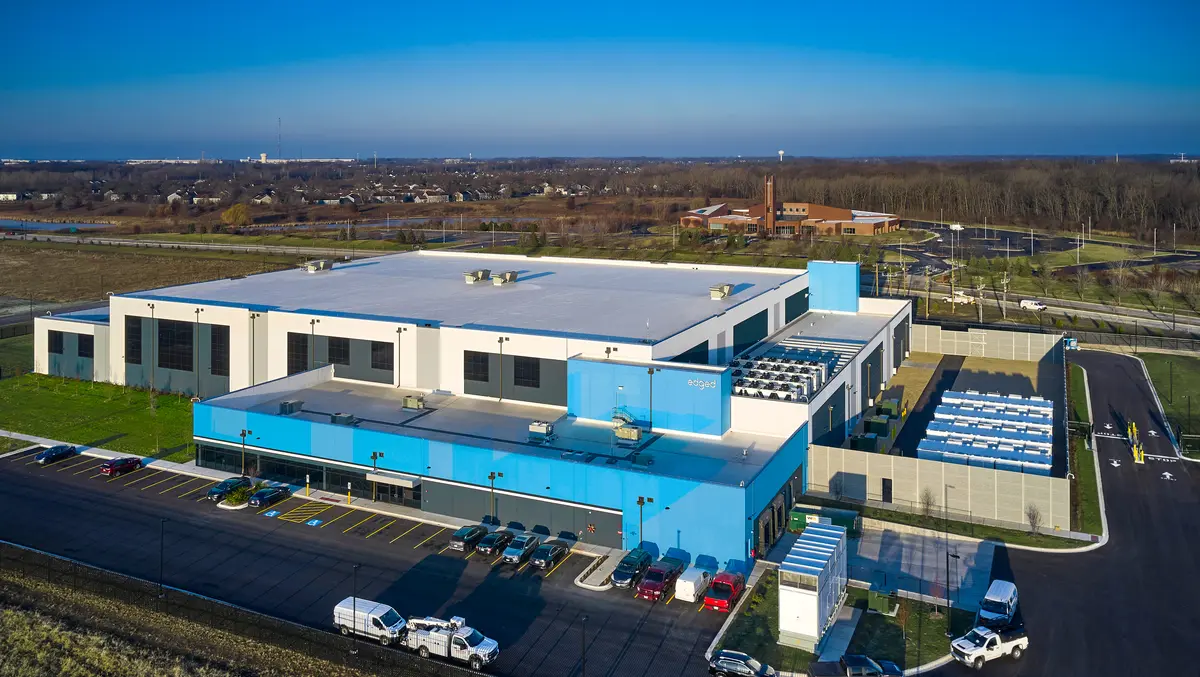
  • A roof over a data hall is not a passive cover. It sits inches above equipment that cannot get wet, cannot lose conditioned air, and in most cases cannot go offline so a crew can work in comfort. We work with the operators, colocation providers, and facilities engineers who run Houston-area data centers, and we treat every scope on those buildings as work performed over a live, revenue-critical load. The membrane question is secondary to a more important one: how do we keep water and disruption away from the white space while the roof gets repaired or replaced?
  • The Houston metro has become a real data center market, with capacity clustered along the energy and telecom corridors west of downtown, around Westchase, and out toward the suburban land north and west of Beltway 8 where power and fiber are easier to bring in. Many of these buildings are large single-story or low-rise structures with wide, flat low-slope roofs broken up by dozens of rooftop units, exhaust fans, and condenser racks. That combination — big membrane area, heavy mechanical equipment, and zero tolerance for interior water — defines how we plan the work.
  • Working over live equipment without exposing the load
  • The first thing we establish on a data center roof is the consequence map: what is directly below each roof section, where the CRAC and CRAH units pull air, and which areas can never be opened without a hard dry-in plan in place. We sequence tear-off and replacement in small, fully closeable sections so that no part of the roof over occupied white space is ever left vulnerable to an afternoon Gulf Coast thunderstorm. Houston rain does not announce itself politely; a clear morning can turn into two inches of rain by mid-afternoon, so our daily rule on these roofs is simple — every square foot we open gets watertight again before crews leave, and often before lunch.
  • We coordinate closely with facilities staff on rooftop airflow. Reroofing near a row of condensers or air intakes can introduce dust, adhesive odor, or torch restrictions that matter far more in a data center than in a warehouse. We favor mechanically attached or adhered systems and cold-applied details over open-flame work when crews are operating above sensitive intakes, and we schedule the noisiest and most fume-generating phases around the operator's change windows where one exists.
  • Penetrations, conduit, and the things added after the roof was built
  • Data centers accumulate rooftop penetrations over their lives — added cooling capacity, new generator exhaust, conduit runs, fiber entries, and lightning protection. Many leaks we find on these buildings are not membrane failures at all; they are failed flashings around equipment that was set after the original roof went on, often with a quick pitch-pocket detail that has since dried out and cracked. We inventory every penetration, rebuild flashings to a standard that will survive Houston's heat cycling, and document what we found so the operator's team knows which details are new and which are still aging.
  • Heat, UV, and energy load on a Houston data hall roof

Roof planning guidance

Cooling is the dominant operating cost in a data center, and the roof has a direct effect on it. Houston summers run long, humid, and intensely sunny, and a dark or aged roof membrane radiates that heat straight into the building envelope. We steer data center operators toward highly reflective white membranes and reflective coatings because every degree the roof surface stays cooler is load the chillers do not have to fight. A reflective TPO or PVC field, or a silicone coating restoring an existing reflective roof, holds surface temperature far below a weathered dark membrane through a July afternoon. Reflectivity also extends the roof's own service life. Houston's UV exposure and daily thermal swing are hard on membranes; the expansion and contraction works seams, fasteners, and flashings loose over time. A cooler-running roof ages more slowly, which matters when the building underneath cannot easily be taken offline for a full replacement. Many of our data center conversations are about how to push a sound roof's life out by another several years through coating and targeted repair rather than committing to a disruptive tear-off before it is truly necessary. Finding water before it reaches the deck

Schedule a roof review
Commercial Roofing for Data Center Operators | Houston, TX
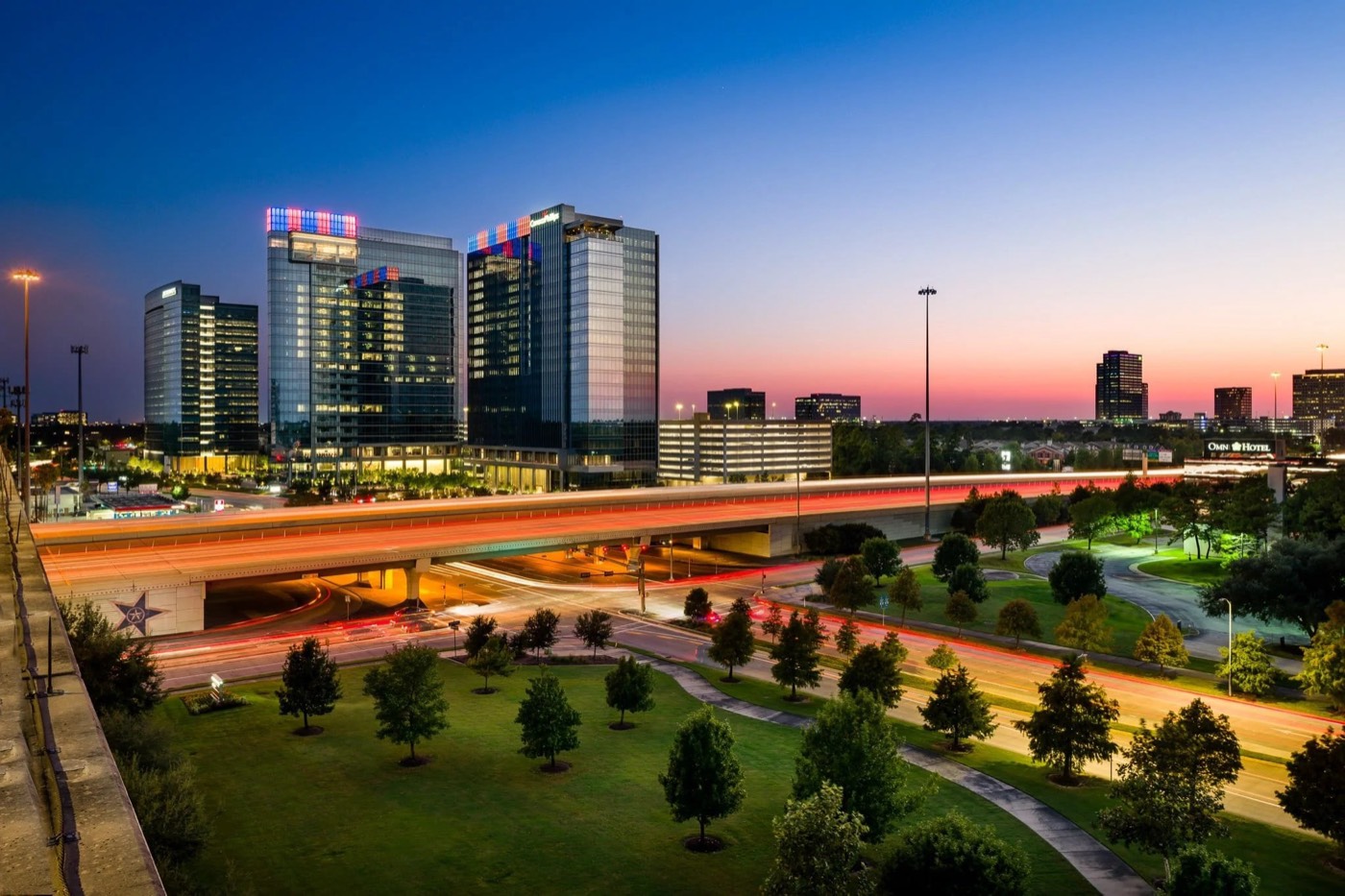
Downtown Houston commercial rooftops

On a building where interior water is unacceptable, we do not wait for a ceiling stain to tell us something is wrong. Infrared and capacitance moisture surveys let us map saturated insulation under an intact-looking membrane, so an operator can plan a targeted repair before wet insulation spreads, corrodes the deck, or finds a seam above a server row. We schedule these scans periodically on roofs we maintain, and we always run one before a recover or coating project so we are not sealing trapped moisture under a new surface.

Storm exposure and the cost of a single breach

Houston sits in a hurricane corridor, and the Gulf Coast wind environment is the stress test every data center roof eventually faces. The 2017 flooding from Harvey reminded every operator in Harris County that water intrusion and power-area risk are existential, not cosmetic. On the roof, the failure mode that worries us most is wind uplift at the perimeter and corners, where pressures are highest and where a lifted edge can peel a membrane and open the field to driving rain. We detail edge metal, parapet flashings, and fastening patterns for the wind zone these buildings actually sit in, not for a calmer climate.

Houston Energy Corridor commercial buildings

We also build a pre-storm and post-storm protocol with operators who maintain roofs with us. Before a named storm, that means clearing drains and scuppers, securing loose components, and confirming the perimeter is sound. After it passes, it means a prompt inspection focused on lifted edges, displaced equipment screens, punctures from windborne debris, and any sign of water tracking toward critical areas — documented with photographs the facilities and risk teams can act on immediately.

Drainage on a flat roof in a heavy-rain city

Ponding is a slow problem that becomes a fast one during a Houston downpour. Flat data center roofs need drains and overflow scuppers that can move serious volume, because Harris County storms routinely overwhelm undersized drainage. We check that primary drains are clear and that secondary overflow paths actually function, correct ponding areas with tapered insulation where standing water is shortening membrane life, and make sure roof drainage is not quietly dumping onto a transformer pad or generator below.

Roof planning notes

How we work with facilities and operations teams

Talk with a Houston commercial roofing team

Whether the need is a recurring inspection program over a campus, a coating project to extend a reflective roof through a few more Houston summers, leak diagnosis above a live data hall, or a phased replacement planned around continuous operation, we scope it around the one constraint that never changes on these buildings: the equipment below cannot get wet, and the load cannot go down. If you operate or manage a data center anywhere across Greater Houston and Harris County, we can walk the roof and give you a plan written for that reality.

Data center operators do not want a roofer who treats the building like a typical commercial job. We plan crane and material staging around generator yards and security perimeters, badge and escort crews per the operator's access rules, and keep the active roof area documented day to day so the facilities lead always knows what is open and what is closed. For colocation providers answering to tenants under uptime commitments, we provide the photo records and condition reports that let them show the roof is being managed, not just patched when something drips. Talk with a Houston commercial roofing team