


Skip to content

We fix leaks around HVAC units, pipe penetrations, and condensate lines on Houston commercial roofs. Curbs, flashings, and drain pans sealed and corrected.

Schedule a Roof Review

  • Where Most Commercial Roof Leaks Actually Start
  • When water shows up inside a Houston commercial building, the source is usually not the open field of the roof. It is the equipment sitting on top of it. HVAC units, exhaust fans, pipe penetrations, condensate lines, gas lines, satellite mounts, and the dozens of small curbs and supports that crowd a commercial roof all create interruptions in the membrane, and every interruption is a place water can get in. We chase these leaks for building owners and property managers all over Harris County, and the same handful of details cause most of the trouble.
  • The volume of rooftop equipment in Houston makes this a constant problem. A single office building in the Energy Corridor or a hospital support facility near the Texas Medical Center can carry dozens of packaged HVAC units, each with a curb, a power penetration, a gas connection, and a condensate drain. Multiply the failure points across a large roof and it is no surprise that the equipment is where the water comes in.
  • The Failure Points We See Most
  • HVAC Curbs and Unit Flashings
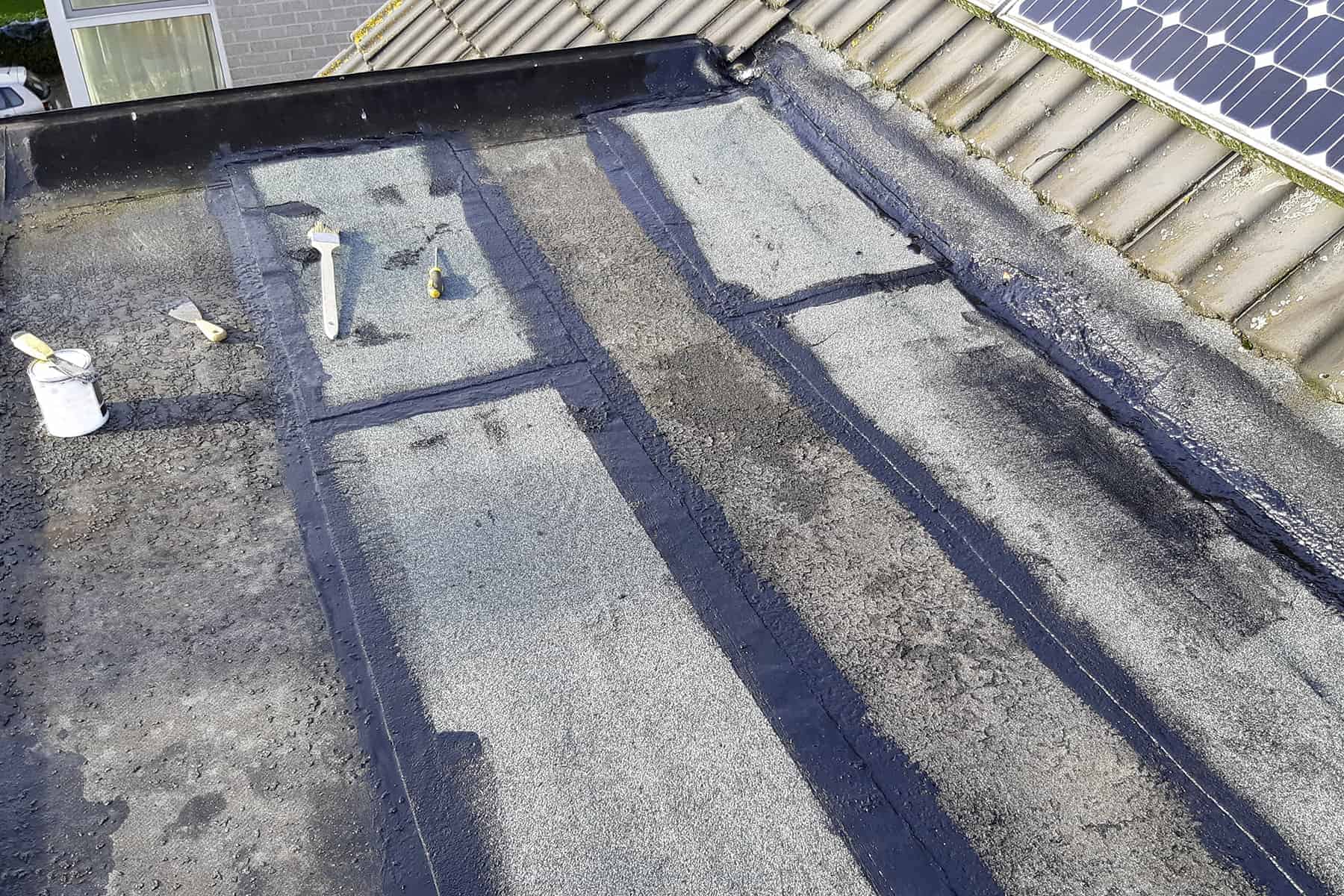
  • Packaged rooftop units sit on curbs, and the membrane has to be flashed up and over those curbs to keep water out. Over time the flashing pulls loose, the sealant at the top edge dries and cracks under the Houston sun, and gaps open where the unit cabinet meets the curb. Water runs down behind the flashing and into the building right at the curb. We re-flash curbs properly, secure the terminations, and seal the cabinet-to-curb joint so the detail actually sheds water again.
  • Pipe and Conduit Penetrations
  • Every pipe, conduit, and gas line that comes through the roof needs a boot or a sealed flashing. Rubber boots crack and split from heat and UV, pourable sealant pockets shrink and pull away from the pipe, and someone running a new line will often just caulk around it and call it done. Those are reliable leak sources. We replace failed boots, rebuild sealant pockets with the right materials, and properly flash penetrations that were never detailed correctly in the first place.
  • Condensate Drains and Pans

Roof planning guidance

This is a Houston-specific headache. Air conditioners run hard for most of the year here, and they produce a steady stream of condensate that has to drain off the roof. When a condensate line clogs, backs up, or dumps onto the membrane instead of into a drain, you get standing water sitting against the unit and the curb for days. That constant wetting breaks down the membrane and the flashings and looks exactly like a roof leak. We trace condensate routing, correct lines that discharge onto the roof, and address the membrane damage the standing water has already caused. Service Traffic Damage HVAC and refrigeration techs walk the roof to service the equipment, and dropped tools, dragged ladders, and foot traffic on a hot membrane all wear down the roof around the units. The damage clusters in the work paths between units and at the access point. We add walkway protection where the traffic is heavy and repair the punctures and abrasions that service work leaves behind.

Schedule a roof review
Rooftop Equipment Leak Repair | Houston, TX
Downtown Houston commercial rooftops

How We Track Down an Equipment Leak

Equipment leaks are deceptive because water rarely shows up directly below the breach. It enters at a curb, runs along the deck or down a pipe, and stains the ceiling somewhere else entirely. Walking the roof and looking for the obvious is not enough.

We inspect every curb, penetration, and flashing in the area uphill of the interior leak, since water travels before it drops

Houston Energy Corridor commercial buildings

We check condensate routing and look for the staining and membrane breakdown that backed-up water leaves behind

We water-test suspect details when the source is not obvious, isolating one penetration at a time

On roofs with widespread or hidden moisture we bring in a moisture survey to map how far the water has already traveled under the membrane

Roof planning notes

Why Equipment Leaks Keep Coming Back

Talk with a Houston commercial roofing team

The other reason leaks recur is that the equipment itself keeps changing. Units get replaced, new lines get run, antennas and solar get added, and each new trade that comes onto the roof creates a new penetration that may or may not have been flashed correctly. After any rooftop equipment work, the new and disturbed penetrations are worth a look before the next heavy rain finds them.

Owners get frustrated because the same leak returns after it was supposedly fixed. Usually that is because someone caulked over the symptom instead of rebuilding the detail. A bead of sealant smeared over a cracked boot buys a few months at most, especially under Houston heat that breaks sealant down fast. We fix the actual flashing and the actual termination so the repair lasts, and we tell you honestly when a curb or a boot is too far gone to patch and needs to be rebuilt.

Protecting the Roof Around Your Equipment

A lot of equipment leaks live in the gap between the roofer and the mechanical contractor, and neither one wants to own the detail where the unit meets the roof. We work alongside HVAC and mechanical crews so the roofing side of every penetration is handled correctly. When a unit is being set or replaced, getting the curb flashing and the penetration sealing done right at that moment is far cheaper than chasing the leak after the fact. For property managers running multiple buildings across Houston, having one roofing contractor who coordinates with the mechanical trades keeps the responsibility from falling through the cracks. Talk with a Houston commercial roofing team