

Skip to content

We handle commercial roofing permits across Houston and Harris County: applications, plan review, wind and energy code compliance, and final signoff.

Schedule a Roof Review

  • The permit is part of the roof
  • A commercial reroof in Greater Houston is not finished when the membrane is down; it is finished when the jurisdiction signs off. Skipping or fumbling the permit is one of the fastest ways to stall a project, fail an inspection, complicate an insurance claim, or create a problem that surfaces years later when the building is sold or refinanced. We manage commercial roofing permits end to end so the work is legal, inspected, and closed out cleanly under whichever authority governs your address.
  • Greater Houston is not a single permitting environment. A building inside Houston city limits goes through the city; one in unincorporated Harris County or in a suburb like Pasadena, Pearland, Sugar Land, The Woodlands, Katy, or Baytown answers to that local authority, and an industrial site in the Ship Channel corridor can carry added layers. We work within the right jurisdiction for your building rather than applying a one-size process, because the requirements, fees, and inspection sequences genuinely differ across the metro.
  • What permit support covers
  • Permit support is the full administrative and code-compliance track that runs alongside the physical work. On our projects it includes:
  • Determining the governing jurisdiction and confirming whether the scope requires a permit, which most full reroofs and structural or deck repairs do.
  • Preparing and submitting the permit application with the correct scope, valuation, and supporting documents.
  • Assembling the technical package: roof assembly details, manufacturer specifications, fastening and attachment patterns, and any required engineering.
  • Responding to plan-review comments and revising submittals until the permit is issued.

Roof planning guidance

Scheduling required inspections at the right milestones and meeting the inspector on site. Carrying the project through to final inspection and closeout so the permit is properly finaled, not left open. Why an open or skipped permit is a real liability

Schedule a roof review
Commercial Roofing Permit Support & Code Compliance | Houston, TX
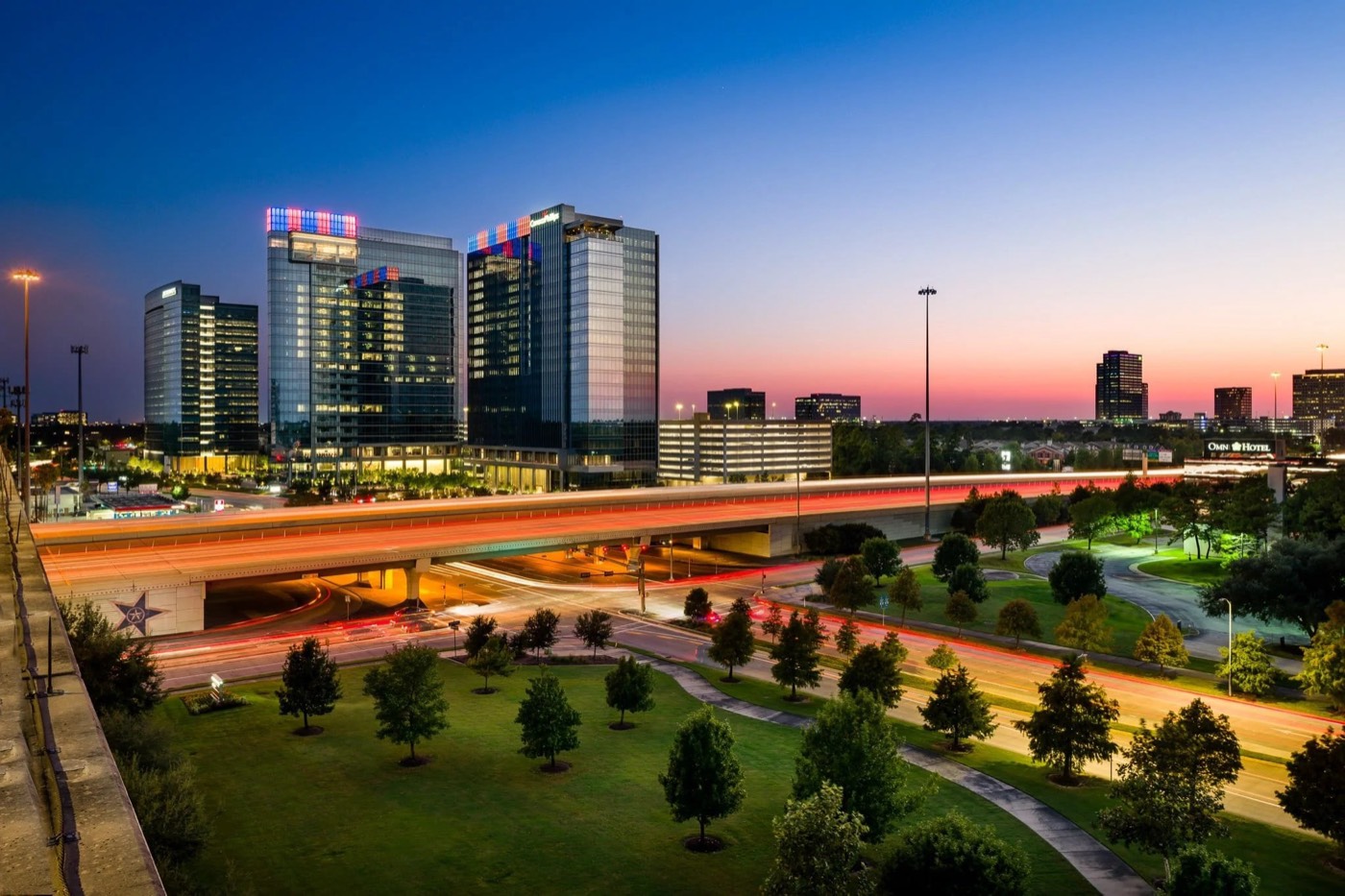
Downtown Houston commercial rooftops

An unpermitted or unfinaled roof is a latent problem. It can surface during a property sale or refinance when a title or due-diligence search turns up an open permit, it can complicate a storm-damage insurance claim if a carrier questions whether the work met code, and it can expose the owner to stop-work orders or penalties. Because Houston is such an active commercial real-estate market, buildings change hands often, and an open roofing permit has a way of becoming the next owner's leverage in a deal. Closing the permit out is cheap insurance against all of that.

Code issues that drive Houston roofing permits

Permit review for a Gulf Coast roof focuses on the conditions that actually threaten buildings here. Three areas come up repeatedly.

Houston Energy Corridor commercial buildings

Wind uplift. Greater Houston sits in a high-wind region defined by hurricane season, and wind-load provisions drive much of the technical review. Reviewers look at the roof's attachment method, fastening density, and the enhanced detailing at perimeters and corners where uplift forces concentrate. We document the assembly and attachment pattern so the submittal demonstrates compliance with the applicable wind design requirements, and so the warranted wind rating and the permitted assembly match. For exposed coastal and industrial sites, that detailing is not a formality.

Energy code and reflectivity. Houston's long, hot cooling season is reflected in energy-code requirements that often steer low-slope commercial roofs toward reflective surfaces and minimum insulation values. This is part of why white reflective TPO, PVC, and coated systems are so common across the metro. Where the code requires a cool-roof surface or a specific R-value, we make sure the specified system meets it and that the documentation shows it.

Drainage. Heavy rain and the flat terrain that made Harvey so destructive in 2017 keep drainage front and center. Reviewers and inspectors care that water gets to drains and off the structure, and that scuppers, overflow provisions, and slope are adequate for the rainfall this region sees. Where a reroof affects drainage, we account for it in the submittal and the field work, consistent with Harris County and HCFCD expectations for moving water off the site.

Roof planning notes

Timing the permit so it doesn't delay you

Talk with a Houston commercial roofing team

Engineering, structural, and tear-off considerations

Permit time is project time, and it varies across the metro. A straightforward like-for-like reroof in one jurisdiction may move quickly, while a larger industrial assembly or anything that triggers plan review and engineering takes longer. The most common cause of permit delay is an incomplete or inconsistent submittal that draws review comments and forces a second round. We front-load the work, getting the application, assembly details, and supporting documents right the first time, so the clock runs once instead of twice. When a project is weather-sensitive, which on the Gulf Coast it usually is given hurricane season and the rainy stretches, we factor the permitting window into the schedule up front rather than letting it collide with the work window. That way you are not staging crews and materials against a permit that has not cleared review. Some reroofs trigger requirements beyond a standard roofing permit. Adding overburden such as new insulation, cover board, or a recover system, or discovering deteriorated decking on tear-off, can raise structural questions that a jurisdiction wants addressed by a licensed engineer. When the scope calls for it, we coordinate the engineering and fold those documents into the permit package rather than discovering the gap at inspection. We also flag at the outset whether your scope is likely to need a structural review, so the timeline and budget reflect it from the start.

Inspections and field coordination

Issuing the permit is the midpoint, not the finish line. Most jurisdictions require inspections at defined stages, which can include deck or in-progress checks and a final inspection, and the work has to be left in an inspectable state at each one. We schedule inspections to fit the construction sequence so the project is not idled waiting on an inspector, we meet the inspector on site to walk the work, and we resolve any corrections promptly so the project keeps moving. The aim is a clean inspection record from first milestone to final. Talk with a Houston commercial roofing team