Skip to content

Roof drainage layout review for Houston commercial buildings. We assess slope, drains, scuppers, and overflows to clear heavy Gulf Coast rain and stop ponding.

Schedule a Roof Review

  • Why Drainage Decides How Long a Houston Flat Roof Lasts
  • A flat commercial roof is never truly flat; it is built to move water to drains and off the building. On the upper Texas coast that job is brutal, because the rain arrives hard and in volume. A single line of thunderstorms can dump several inches in an hour, and a tropical system can sit over Harris County and unload for days, as the region saw during Harvey in 2017. A drainage layout that handles a routine shower can be badly undersized for the downpours this area actually gets. Reviewing that layout, before water finds the gaps, is one of the highest-value things we do on a Houston roof.
  • A drainage layout review is a structured look at how a roof sheds water: the slope that pushes water toward outlets, the drains and scuppers that take it off the roof, the piping or leaders that carry it away, and the overflow path that protects the building when the primary system is overwhelmed. We assess each of those and how they work together, then identify where water is being held instead of moved.
  • The Problem With Ponding Water
  • Ponding is water that lingers on a roof more than a day or two after rain stops. It is common on aging Houston commercial buildings where decks have deflected, insulation has compressed, or drains sit slightly high. A roof designed to drain in hours but holding standing water for days is telling us something is wrong with its layout.
  • Standing water is hard on every roof system. It accelerates aging of the membrane, adds dead load that can deepen the very deflection causing the pond, collects dirt and debris that clog drains further, and finds the smallest seam or fastener flaw and works through it. Reflective white membranes and coatings that help against the intense Gulf Coast sun lose part of their benefit when a pond sits on them collecting grime. Correcting drainage is usually cheaper than repeatedly chasing the leaks and membrane failures that ponding causes.
  • What We Look For in the Field
  • Low spots and ponding patterns, often marked by dirt rings and staining where water repeatedly sits
  • Slope toward drains, or the lack of it, across the whole roof field and in the valleys between high points

Roof planning guidance

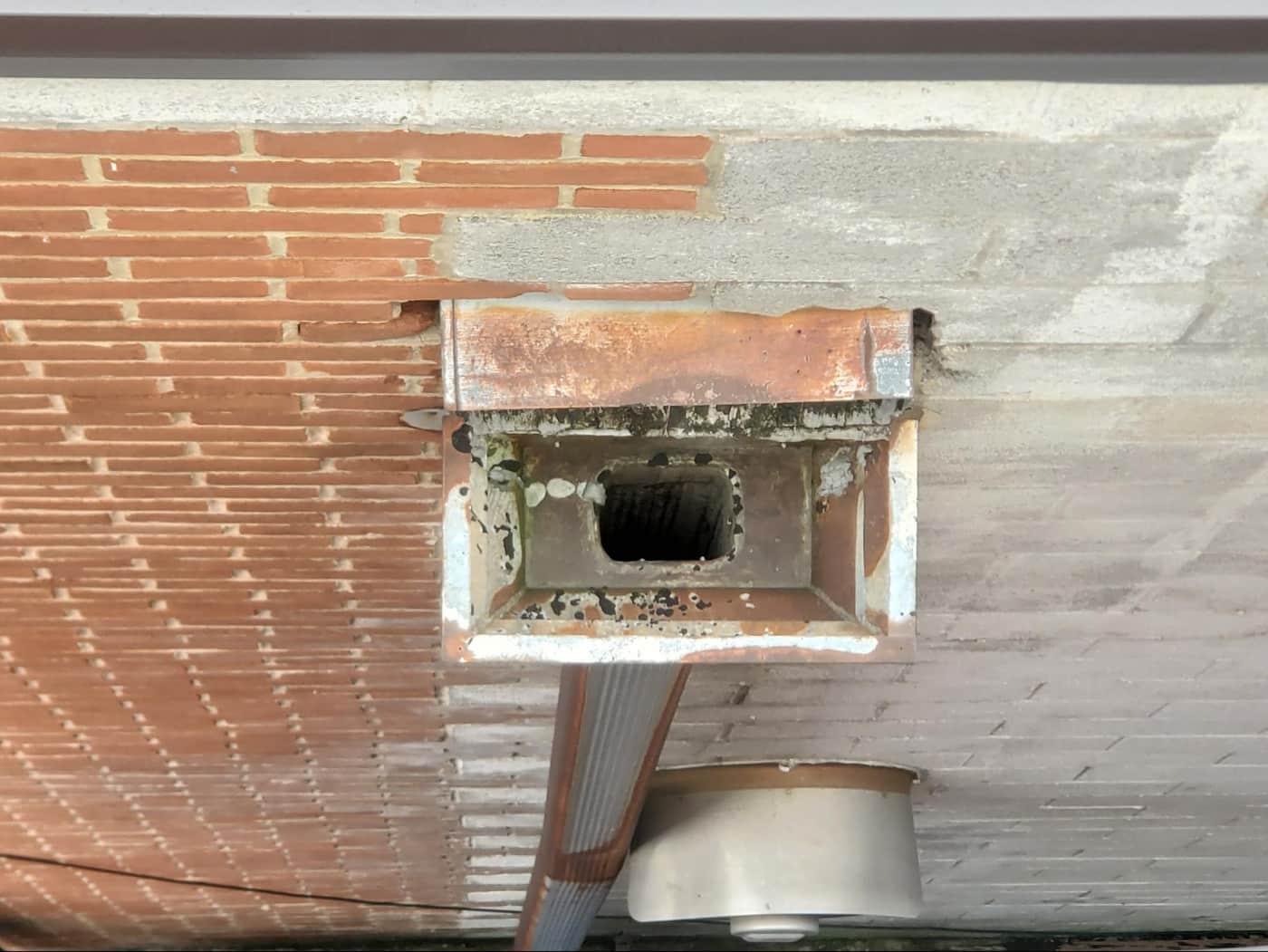
Drains that are clogged, crushed, set too high, or simply too few for the roof area they serve Scuppers and through-wall openings that are undersized, blocked, or set above the water line they need to clear Overflow drains and scuppers, whether they exist, and whether they are placed to protect the roof when primaries clog

Schedule a roof review
Roof Drainage Layout Review | Houston Commercial Roofing, TX
Downtown Houston commercial rooftops

Debris, vegetation, and nesting that choke outlets, a constant issue given Houston's growing season and wind-blown litter

Reading Slope, Drains, and Overflows Together

Drainage works only when slope, outlets, and overflows are matched to each other and to the rain the roof has to handle. Adequate slope means water actually reaches the drains instead of stalling in flat zones or behind rooftop equipment that dams the flow. We map the high and low points and trace where water wants to go, then check whether the outlets are sitting where the water collects or stranded on a high spot.

Houston Energy Corridor commercial buildings

Outlet capacity is the next question. A roof needs enough drains or scuppers, of large enough size, to clear the heaviest rainfall the area produces, not a national average. We look at how many outlets serve each drainage area and whether that is realistic for the intense rates Houston sees. Then there is the overflow system, which is the safeguard most often missing or neglected. When a primary drain clogs during a storm, the overflow has to carry that water off the roof before it ponds deep enough to threaten the structure. We confirm overflows are present, correctly sized, and set at a height that lets them do their job before water gets dangerous.

Equipment, Curbs, and Hidden Dams

Houston commercial roofs are crowded with rooftop units, screen walls, solar arrays, and equipment curbs, and every one of them can block the flow of water if it sits in a drainage path. We check how the layout interacts with this rooftop clutter, because a curb or a unit placed across a valley turns into a dam that creates ponding upstream of it. Sometimes the fix is rerouting water around the obstruction; sometimes it is adding a cricket to divert flow past it.

Roof planning notes

Turning the Review Into Corrections

Talk with a Houston commercial roofing team

Clearing and repairing existing drains, scuppers, and strainers so the current system performs as intended

The review identifies the problems; the value is in fixing them in the right order. Depending on what we find, corrective work ranges from simple maintenance to layout changes. Adding tapered insulation crickets and saddles to build slope toward drains and break up ponding areas

Installing or correcting overflow drains and scuppers so the roof is protected when primaries clog

Adding or enlarging drains and scuppers where the roof simply lacks the outlet capacity for Houston rainfall Talk with a Houston commercial roofing team